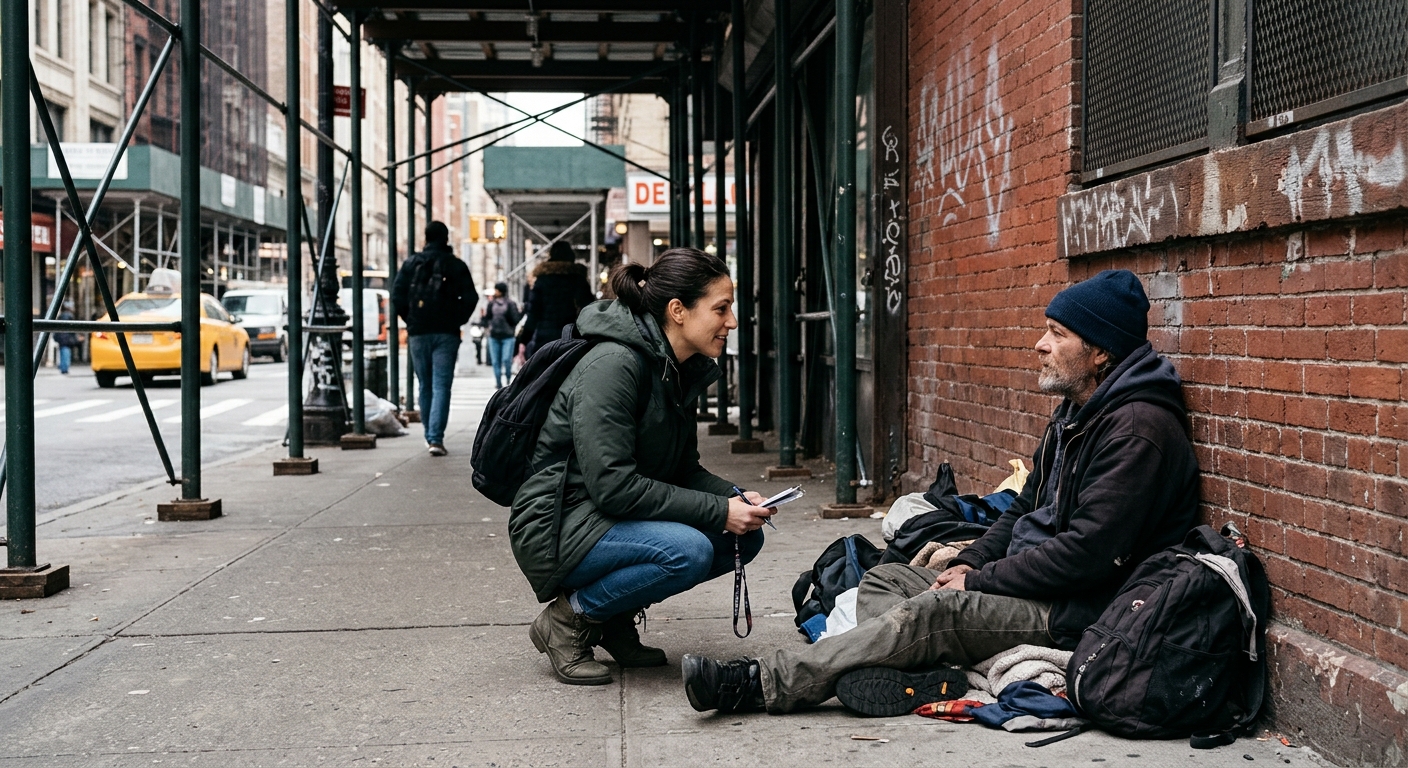
AI-generated illustration; not a photograph of the reported event.
- calendar_today October 31, 2026
Personal Experience Powers Street Outreach
Felipe Ramos, an outreach worker with the Neighborhood Navigators program, knows firsthand the challenges faced by New Yorkers living on the streets. Having experienced homelessness, incarceration, and mental illness himself, Ramos now uses his background to connect with those he helps daily in Manhattan. He believes that sharing similar life experiences forms a genuine bond that builds trust and encourages individuals to seek assistance and develop plans for change.
Neighborhood Navigators: A New Approach to Street Outreach
The Neighborhood Navigators program was established by the Manhattan district attorney’s office to reach out to people living on the streets, aiming to guide them indoors and prevent future involvement with the criminal justice system. In 2024, the program received a $1.25 million grant from the Manhattan DA’s office. This funding supports a broader citywide strategy to combat homelessness by disrupting the cycle that sees individuals move between the streets, hospitals, and shelters.
Strategic Partnerships and Areas of Operation
The district attorney’s office partnered with the nonprofit The Bridge to implement the Neighborhood Navigators initiative, deploying outreach workers in neighborhoods such as Central and East Harlem, Chinatown, the Lower East Side, Washington Heights, Inwood, Midtown West, Hell's Kitchen, and Chelsea. These workers commit significant time to each individual, accompanying clients to appointments and helping them navigate services that can be daunting or overwhelming.
Building Lasting Connections and Outcomes
Program director Rocio Santos emphasizes a trauma-informed approach, shifting the focus from asking "What's wrong with you?" to "What happened to you?" This method prioritizes respect and understanding. Outreach workers, many of whom have experienced homelessness, foster trust by making personalized connections, such as noticing unmet needs or checking in on well-being. According to Manhattan DA Alvin Bragg, hiring individuals who share life experiences with clients strengthens engagement and increases the likelihood of achieving meaningful results.
Success Stories and Impact on Homeless Housing Placement
Since its start, the Neighborhood Navigators program has placed more than 175 individuals in housing. In one instance, outreach workers spent an entire day with a 58-year-old man in Harlem to help reinstate his public benefits. In another, they secured supportive housing for a 67-year-old in Lower Manhattan, also helping him access a psychiatric evaluation and medication to support his stability. These outcomes reflect the commitment of outreach workers to support each individual through every step of recovery.
System Challenges and Community Networks
Despite successes, the Navigators face barriers in accessing the city’s database of homeless outreach interactions, which is limited to groups contracted by the Department of Homeless Services. This can complicate coordination among service providers. Nonetheless, Neighborhood Navigators build informal networks within communities, connecting with local resources for shelter, mental health, and substance use support. Barbara Blair, president of the Garment District Alliance, attests to the navigators’ reliability, emphasizing their consistent, hands-on approach to helping clients.
Looking Ahead: Personal Connection as a Path Forward
Outreach worker Felipe Ramos believes that personal connection and understanding are crucial to disrupting the cycle of chronic homelessness. By being present, listening, and guiding individuals through difficult moments, the Neighborhood Navigators aim to foster sustainable recovery and provide effective homeless services across New York City.
Source: gothamist.com.