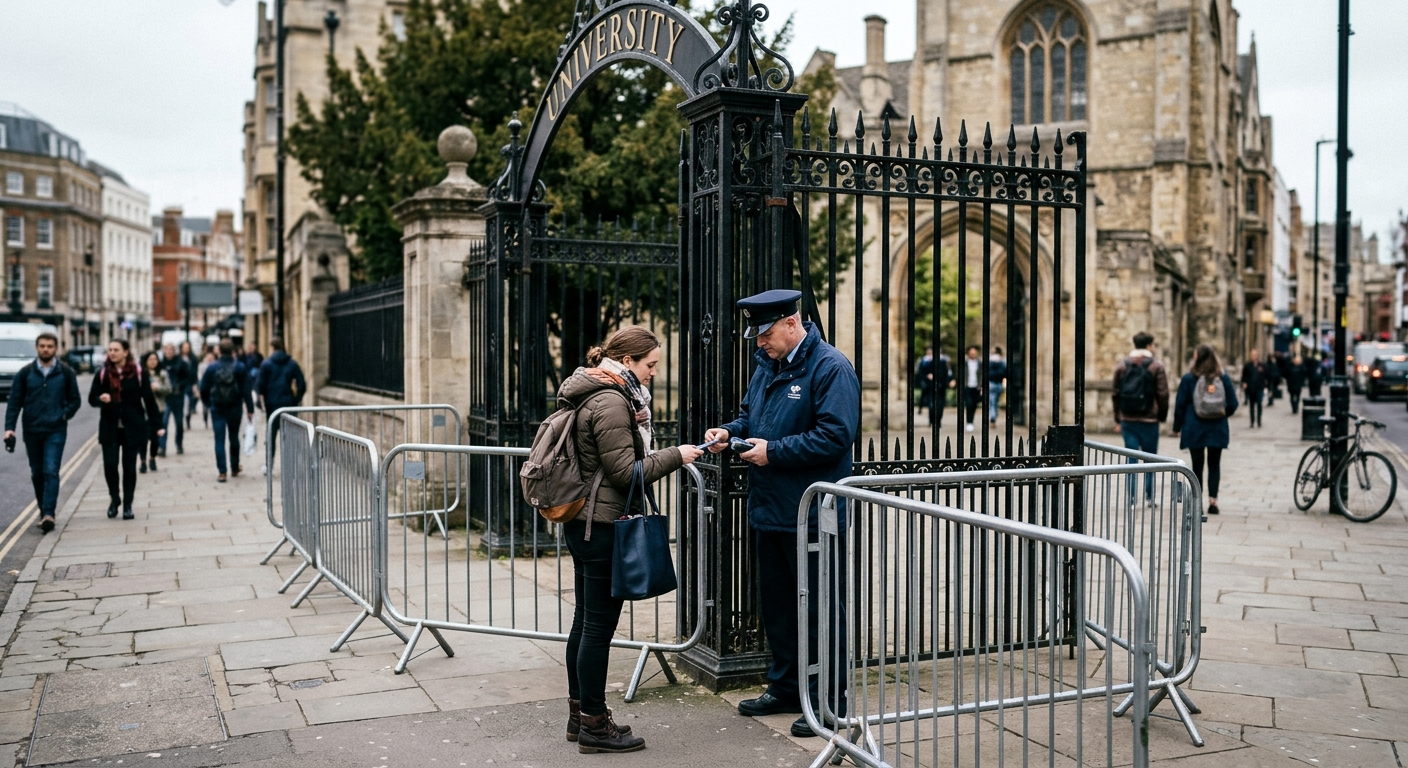
AI-generated illustration; not a photograph of the reported event.
- calendar_today November 19, 2026
Concerns Raised Over Restricted Access to Columbia University Campus
Columbia University is under increased scrutiny from both students and local residents due to continued restricted access to College Walk, a central passage through its Morningside Heights campus. The passage connects Broadway and Amsterdam Avenue at West 116th Street and has traditionally served as a convenient walkway for both students and the neighborhood.
Background: Protests Lead to Tightened Campus Security
The limitations on campus entrances were first implemented during protests over the war in Gaza. Since then, campus security measures have required people to present identification at a side entrance to gain access. This change has sparked debate regarding public access, campus security, and Columbia University’s relationship with its surrounding community.
Mixed Reactions from Students and Residents
Students and local residents voiced their concerns at a meeting with a university official on Wednesday night. Many shared firsthand experiences of the impact of restricted access. "I used to be a student here, and they were always open. It was super convenient," one person commented outside the university.
Current students also expressed their perspectives, emphasizing the need for a balance between security and accessibility. One student told NY1, "I do think that the buildings inside should probably still be badge access, but that’s it." These remarks highlight ongoing student concerns and calls for improved campus access.
Legal Decision and Ongoing Appeals
Legal proceedings have also played a role in the debate. Last week, a judge ruled that the public does not have an inherent right to cross College Walk. In response, residents filed an appeal on Tuesday, seeking to overturn the decision and restore public access to the walkway.
University Response and Commitment to Openness
Despite receiving a favorable ruling in court, Columbia University stated that it continues to explore ways to expand public access to its campus. Loftin Flowers, representing Columbia University, said, "I think we all look forward to that committee being able to make a series of concrete recommendations in short order about how we can become more open." Columbia’s review of its campus access policies is ongoing, with committee recommendations expected in the near future.
Impact on Community and Campus Life
The discussion extends beyond just security measures. State Assembly Member-elect Eli Northrup emphasized the interconnectedness of Columbia University and its surrounding community, saying, "Columbia is successful when Morningside Heights is successful and when the relationship between the neighborhood and the university is good." Neighbor Lenna Nepomnyaschy also spoke out, highlighting the effect on students: "They’re being deprived of a life here in New York City, which is what they came for. They didn’t go to Wisconsin. They came to New York City because this is what they wanted."
The future of public access to Columbia University remains uncertain as the institution weighs security concerns against the importance of a positive university-neighborhood relationship.
Source: ny1.com.