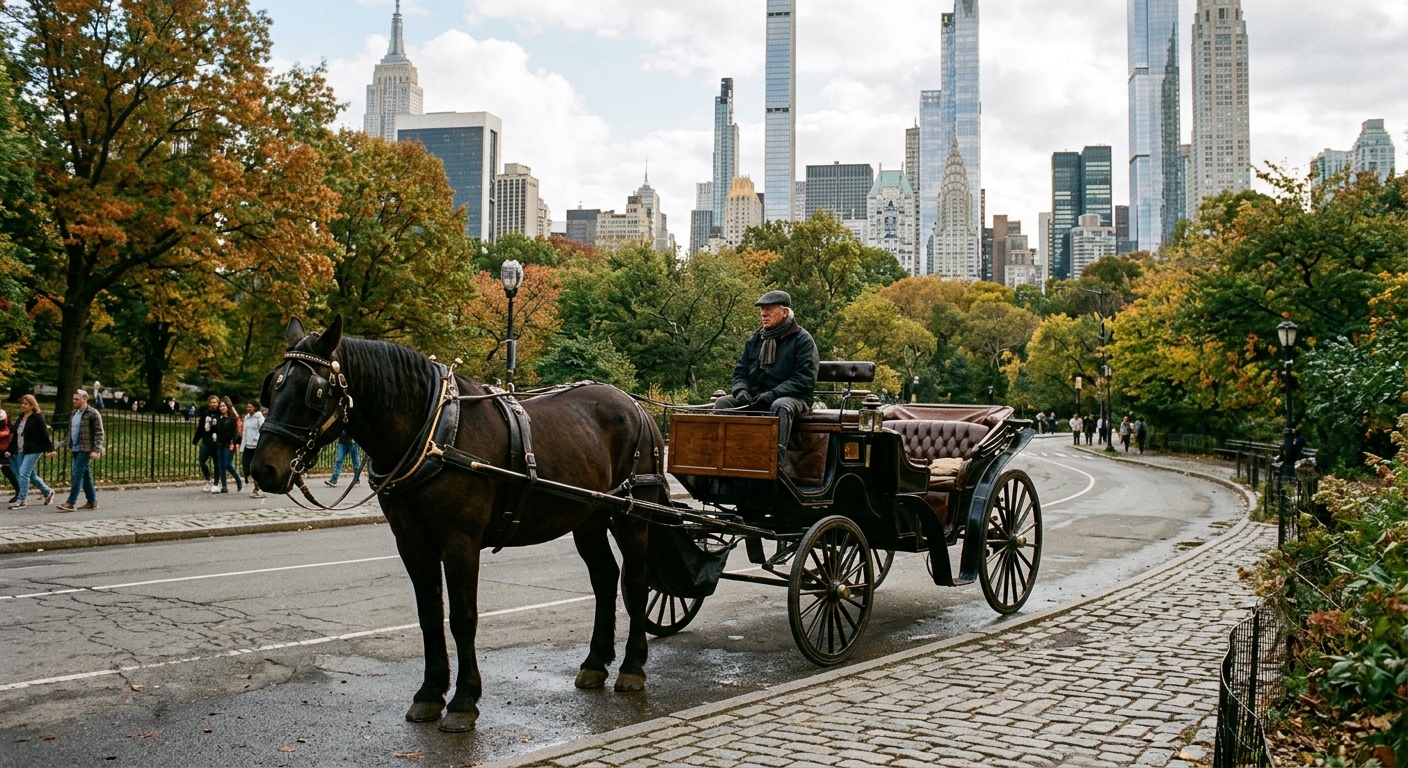
AI-generated illustration; not a photograph of the reported event.
- calendar_today November 19, 2026
New York City’s Horse-Drawn Carriage Industry to End by 2028
New York City’s historic horse-drawn carriage industry will come to a close following the signing of Romanch’s Law by Mayor Zohran Mamdani. The new legislation requires horse carriage operations to cease entirely by June 1, 2028, ending a tradition that has lasted in the city for 150 years.
Mayor Mamdani: Support and Transition for Workers
At the bill signing on Thursday, Mayor Mamdani reflected on the legacy of the central park carriage, stating, “For 150 years, horse-drawn carriages have been a fixture of Central Park. Today, we are bringing that chapter to a close. This industry will come to an end, and we have a responsibility to the workers whose livelihoods depend on it.”
The mayor and his administration pledged a multifaceted support framework for the approximately 200 workers impacted by the ban. This includes medallion buybacks, career support services, and workforce development programs designed to help workers transition to new employment opportunities.
Romanch’s Law: The Path to Legislative Passage
The movement to ban New York City’s horse-drawn carriages gained renewed urgency after the death of Romanch Mahajan, an 18-year-old tourist who was thrown from a runaway carriage horse in Central Park earlier in the year. The legislation, named Romanch’s Law in his memory, gathered significant political support and reignited a long-standing debate about animal welfare and safety within the carriage horse industry.
City Council Speaker Julie Menin described the day of the bill signing as “a truly historic day for New York City, nearly two decades after the Council first considered ending the horse-drawn carriage industry.” Menin emphasized both the well-being of horses and the importance of supporting the workers affected by this major policy change. She noted, “This law will protect the welfare of horses while ensuring that the hardworking New Yorkers who depend on this industry have the support they need to transition to new employment opportunities.”
Union Response and Legal Challenge
The union representing carriage horse workers strongly opposed the ban and announced immediate legal action. The Transport Workers Union International (TWU), led by president John Samuelsen, filed a lawsuit the same afternoon, challenging the constitutionality of Romanch’s Law.
In his statement, Samuelsen described the law as “an unconstitutional abomination,” highlighting concerns over the lack of mandated compensation for city-issued medallions that drivers purchased for large sums. He also criticized provisions that prohibit carriage owners from selling their horses to operators outside New York City, even in jurisdictions where such rides remain legal. Samuelsen added, “Despite the good intentions of the mayor, the protections he outlined recently should have been written into the legislation.”
Looking Ahead: Transition for Workers and Industry
With Romanch’s Law set to take effect, attention now turns to the city’s efforts to provide financial and employment support to the affected workforce and to the upcoming legal battle over the law’s provisions. The fate of New York City’s horse-drawn carriage tradition, as well as its role in the city’s tourism and labor landscape, will continue to be shaped in the years leading up to the 2028 cessation deadline.
Related coverage
Source: ny1.com.