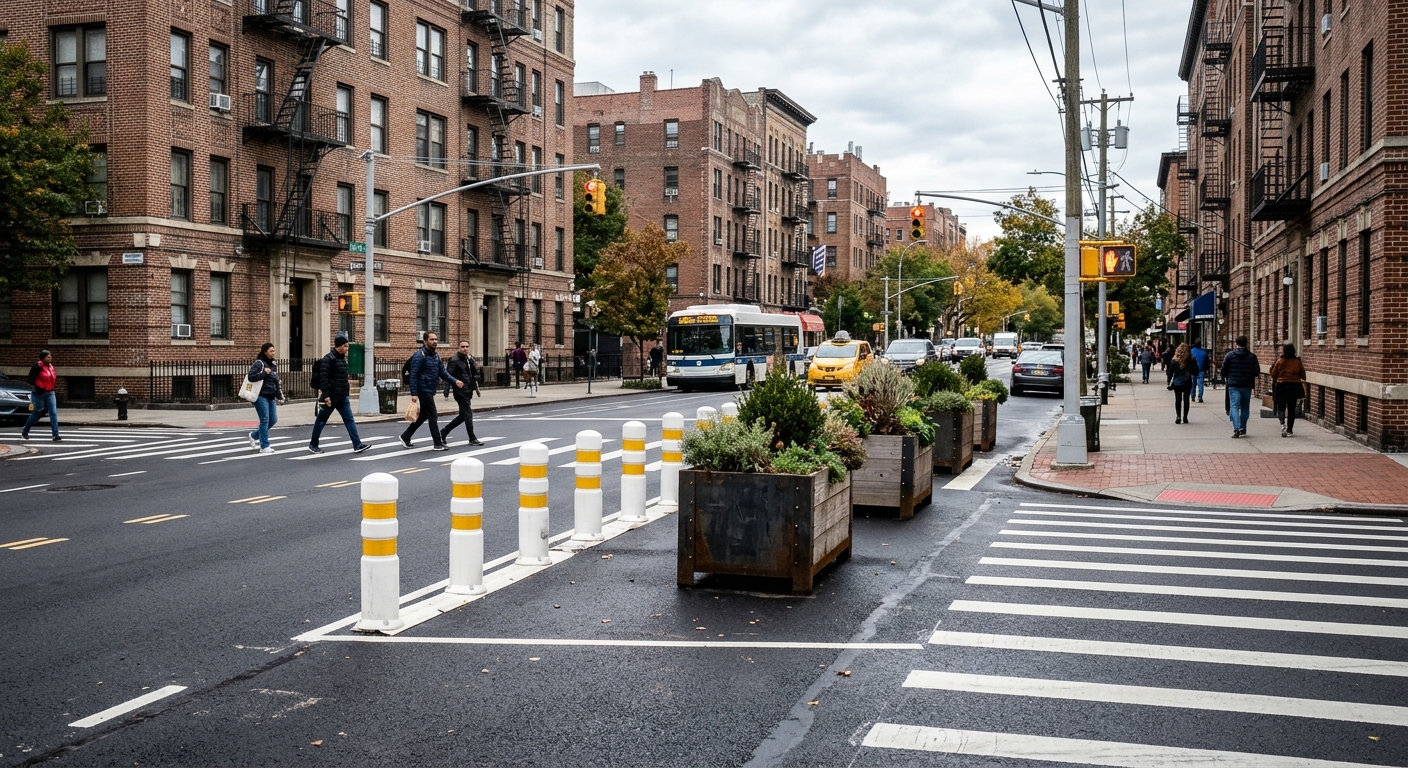
AI-generated illustration; not a photograph of the reported event.
- calendar_today November 12, 2026
Introduction: Street Redesign Targets McGolrick Park
A recent initiative by the New York City Department of Transportation has brought significant changes to the streets surrounding McGolrick Park in North Brooklyn. These efforts are part of a broader push towards creating 'low-traffic neighborhoods' throughout the city, aiming to increase traffic safety and reduce through traffic in residential areas.
Traffic Diverters and Plastic Bollards Installed
In late October, city crews completed the installation of new road markings and robust plastic bollards at the intersections of Driggs Avenue with Monitor and Sutton streets. These traffic diverters force drivers to make turns instead of cutting directly through residential zones, a common shortcut for those attempting to bypass congestion. The changes are designed to slow drivers and reduce the volume of vehicles speeding through the Greenpoint area.
Curb Extensions, Bike Corrals, and Reduced Parking
The redesign process also included curb extensions, which shorten crosswalks and enhance pedestrian safety. Additional features such as bike corrals and a reduction in parking spaces have been introduced on the streets bordering McGolrick Park. These measures contribute to a safer environment for both pedestrians and cyclists.
Community Response and Safety Outcomes
Local residents have played an active role in advocating for these changes. Chris Roberti, a parent and neighborhood organizer, emphasized the need to address risks posed by drivers exiting the Brooklyn-Queens Expressway at high speeds. He noted that major intersections lacked adequate signage, contributing to safety concerns. Since the new infrastructure was implemented, Roberti described a significant reduction in traffic conflicts, calling the difference "night and day." Over the past three years, two fatal incidents have occurred near McGolrick Park, including at Monitor Street and Driggs Avenue, now protected by the new bollards.
Challenges and Continued Adjustments
The transition to the new street layout has not been seamless. Some drivers, including delivery workers like Diego Flores, report that the traffic diverters increase the complexity of their routes. The physical bollards themselves have been damaged by vehicle collisions, prompting city crews to replace them. To fortify these measures, Katie Denny Horowitz of the North Brooklyn Parks Alliance collaborated with officials to place heavy planters near the park as additional deterrents.
Comparisons and Commercial Concerns
The concept of low-traffic neighborhoods is not new to New York City. Similar equipment was installed in 2021 in Sunnyside, Queens, and later upgraded with stronger, concrete barriers. Commercial vehicle operators, including Ferrantino Fuel Oil, have raised concerns about the narrowing of city streets, which can challenge the mobility of larger trucks. Michael Alba, a spokesperson for Ferrantino, stated that the company supports efforts to improve safety but also highlighted operational difficulties.
Looking Forward: Expanding Low-Traffic Neighborhoods
With the approval of a ballot measure aimed at fast-tracking street redesigns, more neighborhoods across New York City may soon see similar projects. The ongoing efforts in North Brooklyn serve as a model for future upgrades, demonstrating both the benefits and the challenges of implementing traffic-calming strategies in urban environments.
Related coverage
Source: gothamist.com.