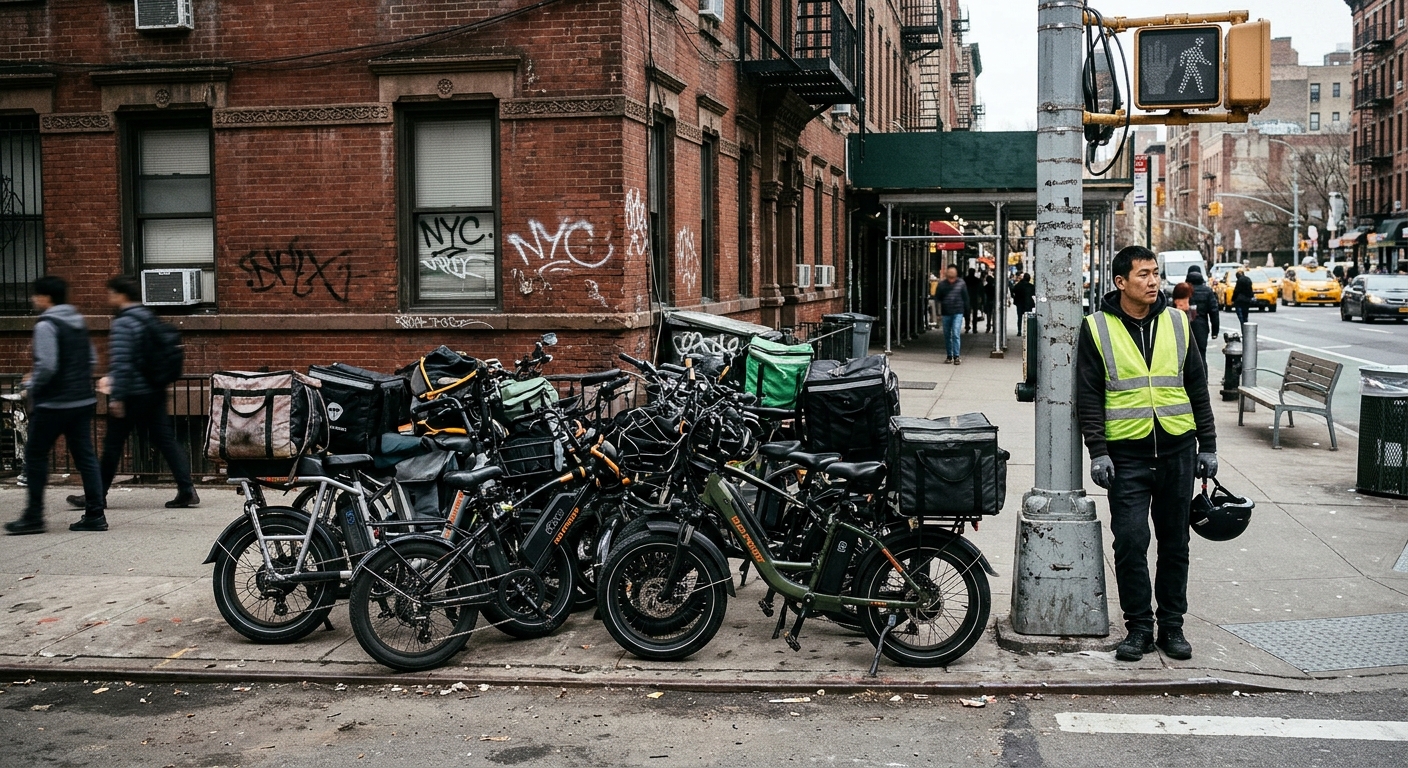
AI-generated illustration; not a photograph of the reported event.
- calendar_today November 12, 2026
Proposed Legislation Targets E-Bike Crisis on East 11th Street
In New York City, delivery e-bikes have become a staple, particularly on East 11th Street in the East Village, where hundreds of bikes line the curb each day. The influx of delivery bikes has sparked complaints from residents over congested streets, leading city officials to respond with bike corrals, increased street cleanings, and police enforcement. Despite these efforts, the core issue remains unresolved: delivery workers lack safe, secure places to park, rest, and charge their electric bikes.
Councilmember Harvey Epstein Introduces New Bill
To address these challenges, City Councilmember Harvey Epstein plans to introduce a bill that would shift the responsibility of providing infrastructure for e-bike delivery workers onto third-party food delivery companies. If passed, the legislation would mandate companies to establish rest areas for workers, complete with bathrooms, e-bike charging stations, and secure bike storage. The initiative aims to relieve the approximately 80,000 e-bike delivery workers—many of them working-class immigrants—who currently must fend for themselves in finding safe facilities.
Debate Over Responsibility for Delivery Infrastructure
The heart of Epstein’s proposal raises a fundamental question: who should pay for the ebike delivery infrastructure that powers New York City’s food delivery economy? Advocacy groups, such as the Worker’s Justice Project and its subsidiary Los Deliveristas Unidos, argue that delivery workers have been left without adequate city support for crucial needs like secure parking and charging. "This is an infrastructure crisis our city has," said Ligia Guallpa, executive director of the Worker’s Justice Project. Guallpa noted the city has yet to catch up to the rapid growth of e-bike deliveries.
Safety Risks and Recent Incidents Add Urgency
The proposal arrives in the context of mounting safety concerns. This year, deaths and injuries from lithium-ion battery fires—used to power most e-bikes—have surged. According to fire department data, nine people have died and 71 have been injured in such incidents so far this year. Recent fatal fires in Sunset Park and the Bronx have highlighted the dangers, with batteries found at the scene of both tragic events.
City and Industry Initiatives Show Mixed Progress
In April, the Mamdani administration opened the city’s first federally funded delivery worker hub near City Hall, providing charging and rest facilities, but advocates maintain one hub is far from adequate. The city’s Department of Transportation, under former Mayor Eric Adams, is also preparing to install 25 new ebike charging stations citywide using $3 million in state funds. However, a separate $25 million federal funding package for public housing charging stations remains unallocated.
Examples from companies like Amazon and JOCO—which offer indoor rest and storage spaces for delivery workers—also influenced Epstein's bill. "Amazon, JOCO, it's exactly the same model that we're trying to really make the industry standard,” Epstein said.
Next Steps and Industry Response
The proposed legislation would delegate to the city’s Department of Consumer and Worker Protection the specifics of where and how many delivery worker rest areas are needed, with new rules required within a year of the bill’s passage. While prominent delivery app companies including Uber Eats, Grubhub, and DoorDash have not commented, Epstein said he consulted their representatives in drafting the bill.
The administration has indicated it is open to considering the proposal. "Delivery app companies must do more to support the workers that make their companies possible," said mayoral spokesperson Cassio Mendoza. Guallpa, the labor advocate, called on all public officials to address what she describes as a fundamental micromobility infrastructure crisis for delivery workers in New York City.
Related coverage
Source: gothamist.com.