AI-generated illustration; not a photograph of the reported event.
- calendar_today October 26, 2026
A Shift in NYC Restaurant Sustainability
Sustainability has long been a talking point for the restaurant industry, especially in major cities like New York. However, a distinct shift is underway as many NYC restaurants adopt more understated approaches to sustainable practices—focusing on operations rather than overt marketing. This evolution reflects changes in consumer attitudes, economic pressures, and evolving definitions of what sustainability means in the dining world.
Golden Ratio: Sustainability by Design, Not Slogan
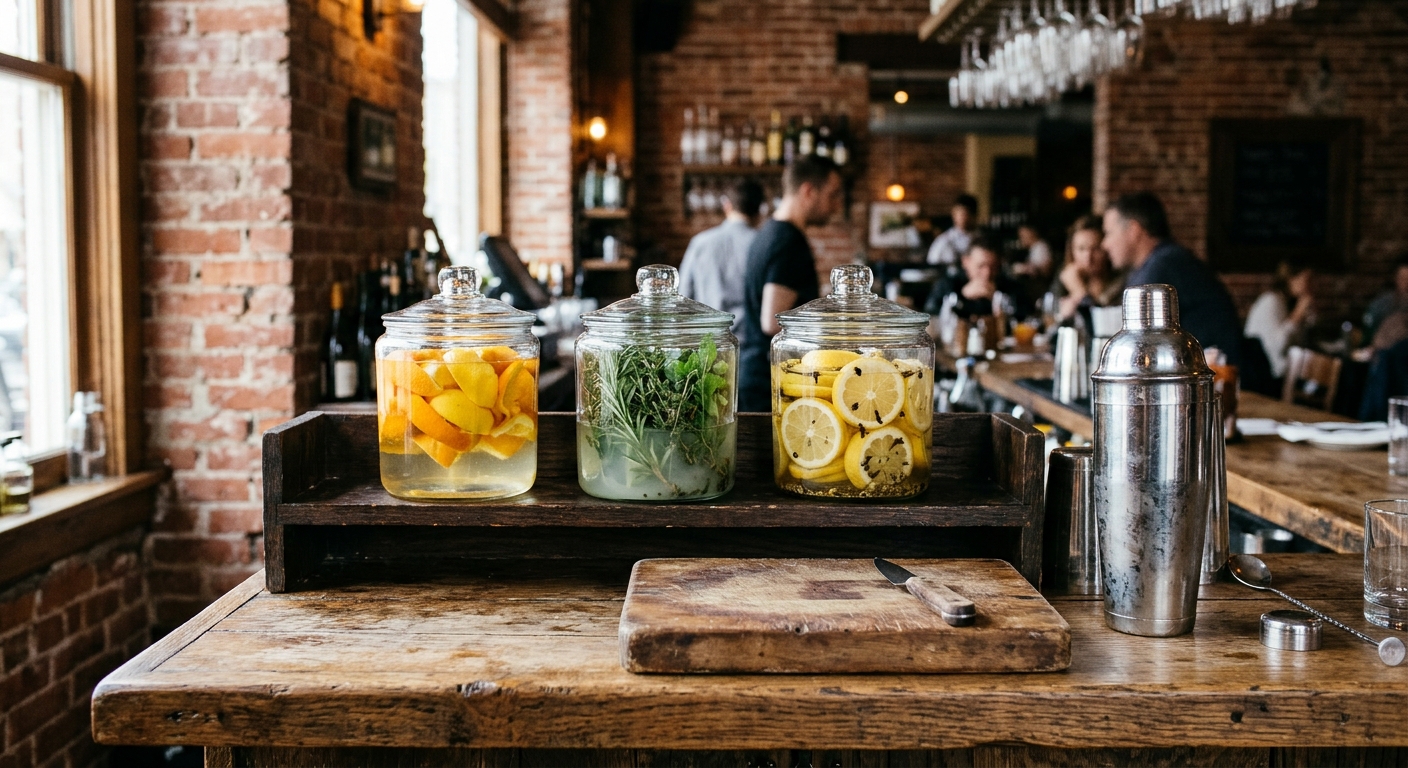
Golden Ratio, a cocktail bar in Clinton Hill, Brooklyn, embodies the new wave of restaurant sustainability. Rather than touting their efforts on the menu, the bar quietly integrates them into daily operations. Their beverage program, driven by 52 micro-seasons, captures local plants at key points before they would otherwise become waste. Local partnerships play a key role: Golden Ratio works with Brooklyn-based Acid Spirits to create custom liquors distilled from common kitchen discards, like lemon peels and stale bread. These sustainable beverage practices showcase innovation and resourcefulness, ensuring minimal food waste without flashy marketing.
Piper Kristensen, Golden Ratio's beverage director, trains staff to evaluate potential waste before discarding anything. The focus, he notes, is on creativity within boundaries, describing sustainability as a constraint that encourages experimentation—turning ingredients otherwise headed for the landfill into unique cocktails. However, Kristensen explicitly avoids branding the menu as sustainable, believing that sustainability in restaurant marketing isn't always appealing to guests. "I don’t think that opening with your commitment to sustainability is a very fun and sexy thing to do," he explained.
The Evolution of Sustainable Restaurant Marketing
In the 2010s, sustainability was a dominant restaurant trend. Notable establishments like ABC Kitchen, opened by Jean-Georges Vongerichten in 2010, received accolades for their focus on local sourcing and eco-friendly operations. At the time, menus boasted details like "recycled-paper menus" and "thrifted uniforms," and terms like "farm-to-table" and "haute barnyard" entered the popular lexicon. However, more recently, such themes have become less prominent in marketing, even as sustainability remains central to restaurant operations.
According to industry figures, this shift is in part motivated by economic realities. Restaurants face inflation, higher wages, and shifting consumer habits (including younger generations drinking less). As a result, prioritizing customer experience over "dogmatic" sustainability messaging is increasingly common. Adam Platt, a former chief restaurant critic, once described farm-to-table as "the most fashionable and formulaic trend," yet now even acclaimed locations like Eleven Madison Park have stepped back from bold sustainability experiments that risk alienating some diners.
Behind-the-Scenes Sustainable Practices
Even when not heavily marketed, operational sustainability practices persist. At Grand Banks, an oyster bar aboard a historic sailboat in Tribeca, sustainable seafood sourcing is summarized in just three words—"local, wild, sustainable"—in small print. The restaurant collaborates with a Long Island oyster grower to manage a proprietary strain and participates in the Billion Oyster Project’s shell recycling initiative, helping rebuild marine habitats around New York Harbor. Despite logistical challenges—staff must separate and store shells for collection—the commitment to sustainable seafood and environmental restoration remains strong. Yet, as Kristi Chaudhuri of the Billion Oyster Project notes, participation is largely driven by restaurant leadership rather than diner demand.
Restaurants That Highlight Sustainability
While many restaurants have turned the volume down on sustainability marketing, some, like Starrlight Bakery in Bushwick, still highlight their environmental commitments. Every week, the micro-bakery stamps “Made from Solar Power” on thousands of sourdough loaves. Owner Emanuel Ruffler has experimented with ways to tangibly connect customers to his climate-conscious approach, including offering a free loaf to those who sign up for a community solar project—though take-up was limited.
Integrating Sustainability as a Core Value
Restaurant sustainability in New York is undergoing a quiet transformation. Rather than serving primarily as a marketing hook, sustainable restaurant practices are becoming embedded in everyday decision-making. As Andrew Rigie of the NYC Hospitality Alliance explains, sustainability is now viewed as fundamental to business operations. For establishments like Golden Ratio, resourcefulness bred from sustainability constraints inspires creativity and supports long-term viability, even if these efforts aren’t always visible to diners. In New York’s competitive dining scene, sustainability is less about image and more about survival and ingenuity.
Source: gothamist.com.