- calendar_today August 13, 2025
As 2025 unfolds, New York’s commercial real estate (CRE) market continues to lag behind broader economic stabilization. Office towers across Manhattan remain under-occupied, retail corridors face evolving foot traffic patterns, and industrial assets show signs of saturation. Despite early optimism, the state’s recovery is proving uneven and slower than projected.
While economists forecasted a rebound by mid-2024, several structural, financial, and regulatory shifts have stalled progress. Below are seven major reasons why CRE recovery is lagging across New York in 2025—and the implications for investors, developers, and urban planners.
1. Office Vacancy Rates Remain Stubbornly High
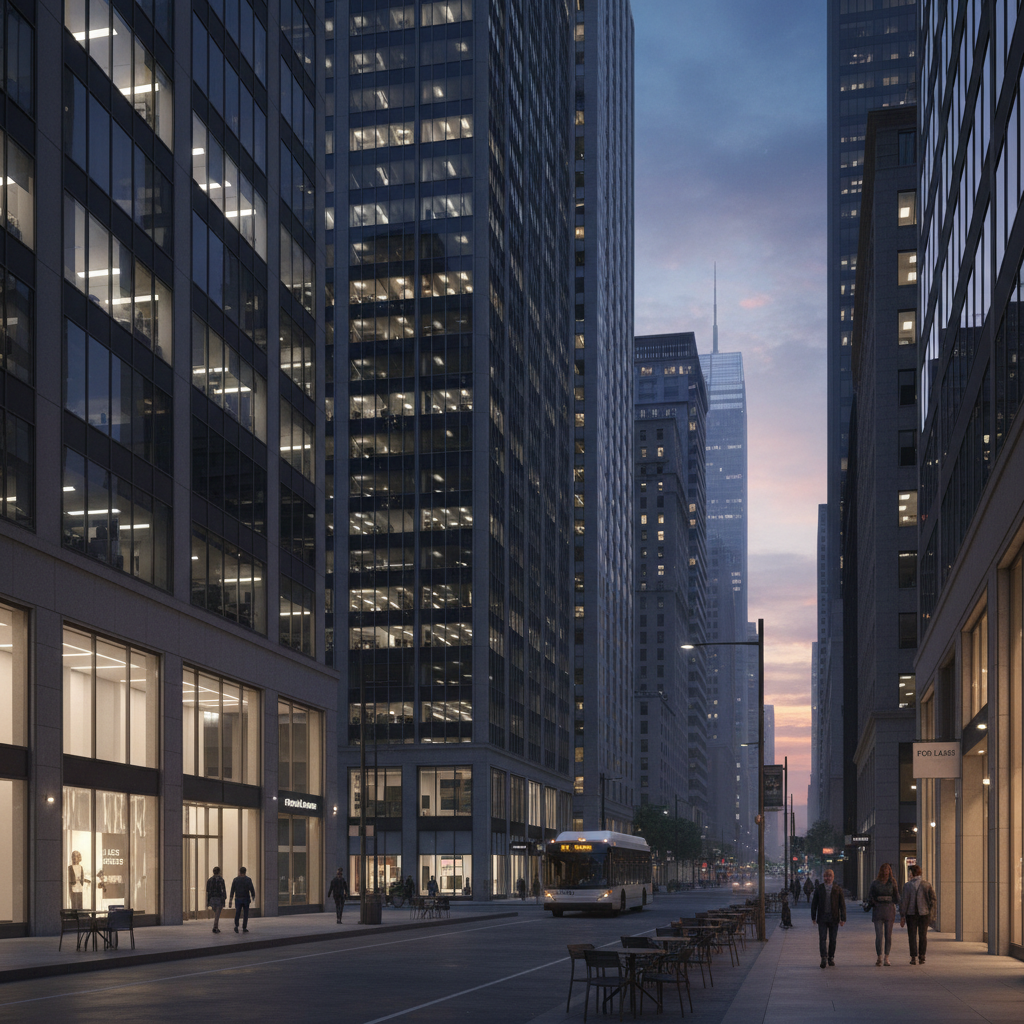
New York City’s office sector remains ground zero for the remote work transformation. CBRE’s Q2 2025 Office Report shows Manhattan vacancy rates reaching 22.6%, significantly higher than the national average of 18.7%. Midtown and Downtown office corridors, traditionally among the priciest in the U.S., are seeing tenants downsize, sublease, or delay leasing decisions altogether.
While some outer boroughs like Brooklyn and Queens are witnessing growth in smaller office footprints—often near transit hubs—the state’s overall office demand remains tepid. Hybrid work has become entrenched, forcing landlords to provide tenant improvements, flexible lease terms, and amenities just to stay competitive.
“The New York office market has undergone a fundamental transformation—it’s no longer about square footage but about flexibility and experience,” said Julie Whelan, Head of Occupier Research at CBRE.
2. Retail Real Estate Faces Lasting Behavioral Shifts
New York’s iconic retail scene—once driven by tourism and high-end storefronts—has been reshaped by consumer behavior and e-commerce dominance. Despite a rebound in foot traffic in outdoor shopping areas like SoHo and Williamsburg, enclosed retail centers and large department stores are underperforming.
Placer.ai reports that retail traffic in New York’s flagship locations, such as Fifth Avenue and Herald Square, remains 25% below 2019 benchmarks in Q2 2025. Meanwhile, retail stalwarts like Macy’s are consolidating their real estate holdings.
Adaptive reuse of former big-box and mall spaces into mixed-use, healthcare, or residential developments is gaining interest from developers—particularly in upstate regions like Westchester and Long Island—but the conversion process is capital-intensive and slow-moving.
3. Industrial Sector Cools After Explosive Growth
Once a high-performing segment in New York’s CRE landscape, industrial real estate is beginning to plateau. The demand surge for last-mile logistics during the pandemic led to massive expansion in areas such as the Bronx, Staten Island, and New Jersey’s port-adjacent industrial belt.
However, Cushman & Wakefield data shows the industrial vacancy rate in the Tri-State region rose to 6.7% in Q2 2025, driven by slower e-commerce growth, elevated operating costs, and increased supply from recently completed builds.
Investors are now evaluating logistics assets more critically, especially in dense urban zones where zoning, noise, and traffic regulations present ongoing challenges.
4. Multifamily Development Delayed by Financing Hurdles
Multifamily remains a strong demand driver in New York, but development is slowing due to high interest rates, rising construction costs, and labor shortages. The U.S. Census Bureau reported a 14.1% year-over-year decline in multifamily permits statewide in May 2025.
While rental demand remains healthy in neighborhoods like Bushwick, Jersey City, and Astoria, developers are cautious. Zillow’s June 2025 index shows rent growth in the New York metro area slowing to 1.4% year-over-year, a steep drop from the 6.2% seen in 2023.
Projects in the pipeline are being restructured or shifted toward build-to-rent models, especially in suburbs and exurban areas where land is more affordable and regulations are less burdensome.
5. Investment Activity Slows to Multi-Year Lows
Capital is retreating from New York’s CRE market. MSCI Real Assets reports that CRE investment volume across the New York metro area declined by 32% in H1 2025 compared to the same period last year.
Rising borrowing costs, tighter underwriting standards from regional banks, and uncertainty around asset values have dampened transaction activity. Notably, office-heavy portfolios are seeing markdowns as lenders grow wary of future cash flows.
Foreign investment, once a cornerstone of New York’s CRE market, has also waned. Concerns over political risks, tax policies, and lower returns have prompted global investors to adopt a wait-and-see approach.
“New York is going through a price discovery process—until sellers adjust expectations, many buyers will remain on the sidelines,” noted Jim Costello, Chief Economist at MSCI.
6. Policy and Tax Shifts Add to Uncertainty
Policy developments are also shaping the trajectory of New York’s CRE recovery. Renewed talks of commercial rent stabilization in Albany have created concerns among landlords about future rent controls. Additionally, rising property taxes and reassessments in the five boroughs are straining profitability for property owners.
On the urban planning front, New York City’s push to convert underutilized office buildings into housing through its “City of Yes” zoning initiative is gaining momentum. However, zoning complexity and building code compliance remain barriers to quick execution.
Upstate cities like Buffalo and Rochester are also debating new tax credits and grants to boost downtown redevelopment, but inconsistent policy rollout is causing investor hesitation.
7. CRE Market Faces a Confidence Crisis
Even with stabilization in sight, sentiment within New York’s commercial property circles remains cautious. Institutional investors are rebalancing portfolios away from real estate amid public market volatility and an uncertain CRE outlook.
REIT performance reflects the mood—regional mall and office REITs with heavy New York exposure continue to underperform, according to Nareit sentiment indicators. While industrial and multifamily remain more resilient, risk-adjusted returns are no longer compelling for every geography.
Industry gatherings like the Real Estate Board of New York (REBNY) 2025 conference and ICSC Las Vegas have emphasized the need for transparency, better data integration, and ESG alignment, but uptake across the sector is fragmented.
What to Watch in the Second Half of 2025
Despite a rocky start to the year, there are signals that stabilization may emerge:
- The Federal Reserve’s pause in interest rate hikes could re-open credit lines for stalled developments.
- Zoning reforms and office-to-residential incentives may encourage adaptive reuse in Manhattan and Brooklyn.
- A wave of distressed asset sales could reset pricing expectations, drawing institutional buyers back into the market.
Yet, experts caution that New York’s CRE recovery will not be uniform. Office and legacy retail assets will likely continue to struggle, while industrial and multifamily may lead the rebound—especially in tech and life sciences-driven areas such as Long Island City and Hudson Yards.
Final Takeaway
In 2025, New York’s commercial real estate market is navigating a reality reshaped by pandemic-era behavioral shifts, financial uncertainty, and regulatory transitions. While full recovery remains a possibility, stakeholders must prepare for a slow, segmented, and highly localized path forward—one that will require innovation, flexibility, and long-term strategic thinking.