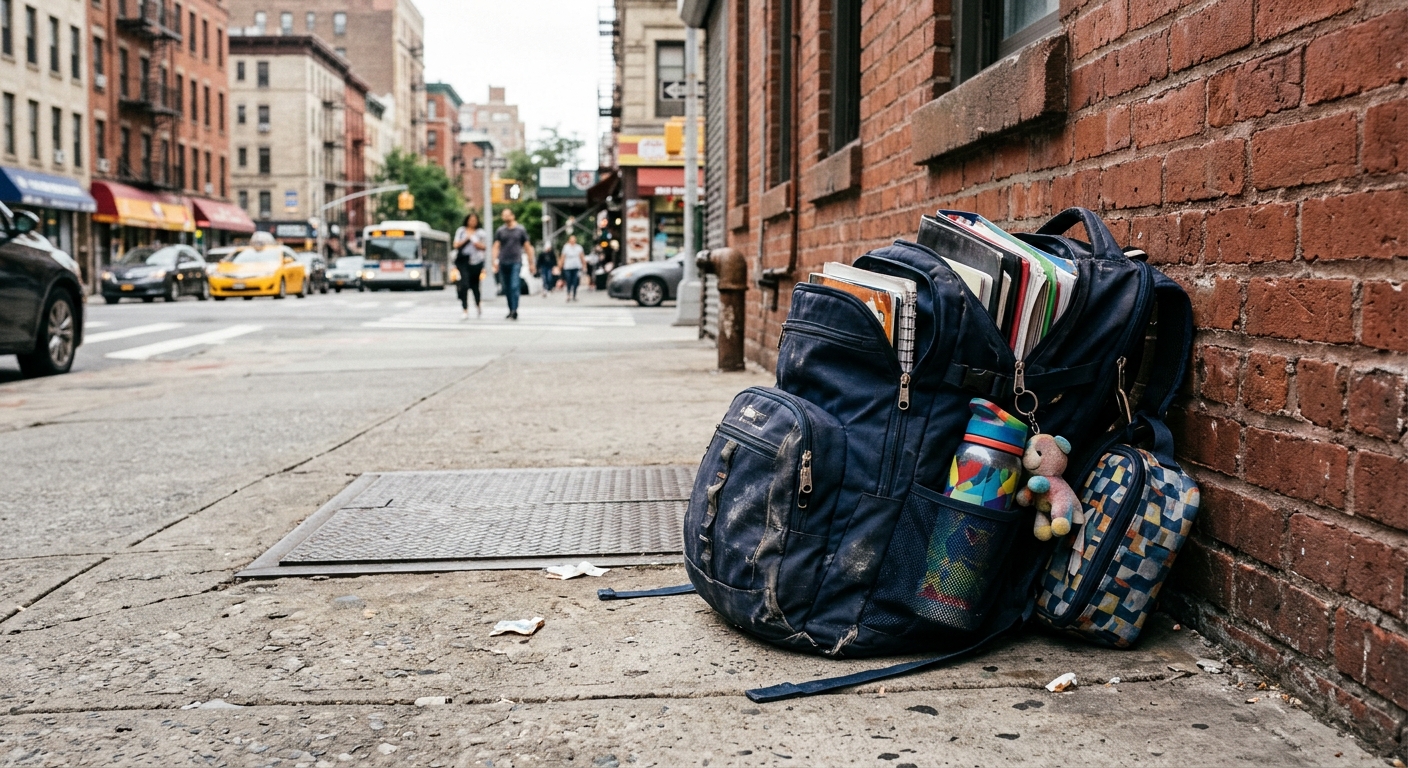
AI-generated illustration; not a photograph of the reported event.
- calendar_today November 10, 2026
Overview of NYC Student Homelessness
During the latest academic year, one in eight public school students in New York City experienced homelessness at some point—a figure that totals approximately 138,000 children. Although this is a decrease from about 154,000 students the year before, the data highlights ongoing challenges for many families across the city.
Trends and Historical Context
According to the organization Advocates for Children, this marks the eleventh consecutive year that more than 100,000 NYC public school students have been homeless. While the total figure saw a reduction compared to prior years, Jennifer Pringle, project director for learners in temporary housing at Advocates for Children, noted, "the number remains incredibly high, and much higher than it was ten years ago." She emphasized that while the recent decline is hopeful, the city has not resolved the broader issue of family homelessness.
Details on Living Situations
Of the 138,000 homeless students, 50,700 spent time in an official city shelter. The majority—about 81,100—were doubled up, sharing another person's housing after losing their own. The remaining students experienced other forms of temporary housing, as detailed in the annual report from Advocates for Children.
The decline in the number of homeless students was attributed, in part, to a 22% reduction in students living in shelters. This change coincided with the closure of several large shelters, many of which had been used to house families arriving during the recent migrant crisis.
Educational Outcomes and Instability
Homeless students, particularly those living in shelters, continue to face significant educational challenges. Data show that, for the 2024-2025 school year, more than 60% of students in shelters were chronically absent, and one in five transferred schools mid-year. This instability is compounded by logistical issues, such as when 37% of families were placed in shelters located in different boroughs than their children's schools.
Pringle commented, "That kind of instability is not surprising when you have families placed in shelter in a different borough from where the kids go to school."
Efforts to Improve School Stability
The city's Department of Education (DOE), led by Schools Chancellor Kamar Samuels, reported ongoing collaboration with other city agencies and advocacy groups to better support homeless students. Efforts include policy changes such as eliminating requirements for students to attend all housing meetings and creating community schools in districts with many shelters.
Samuels stated, "Supporting these students is both a priority and shared responsibility... As this report shows, this work is far from over, and we’ll continue to work in partnership to bolster resources, address ongoing challenges, and ensure that our most vulnerable students have the support they need to receive a rigorous, high-quality education."
Challenges With Shelter Placement and Transportation
Although the city considers the youngest child’s school location when placing families in shelters, immediate availability of beds in the same borough is not always possible. There is also currently no system in place to alert families if a unit closer to their school becomes available, which Jennifer Pringle described as a "lost opportunity."
Student transportation remains another significant barrier. Even after placement, homeless students may wait a month or longer to be assigned to a school bus. "If everything works perfectly... you're looking at a minimum of a month from the time you enter shelter to the time you get a bus to your school of origin. That is way too long for a child to wait," Pringle explained.
Looking Forward
The DOE maintains that enhanced interagency cooperation and refined practices are essential for minimizing educational disruptions for homeless students. While the number of homeless public school students has recently declined, the persistence of the problem highlights the continued need for comprehensive support and innovative policies.
Related coverage
Source: ny1.com.