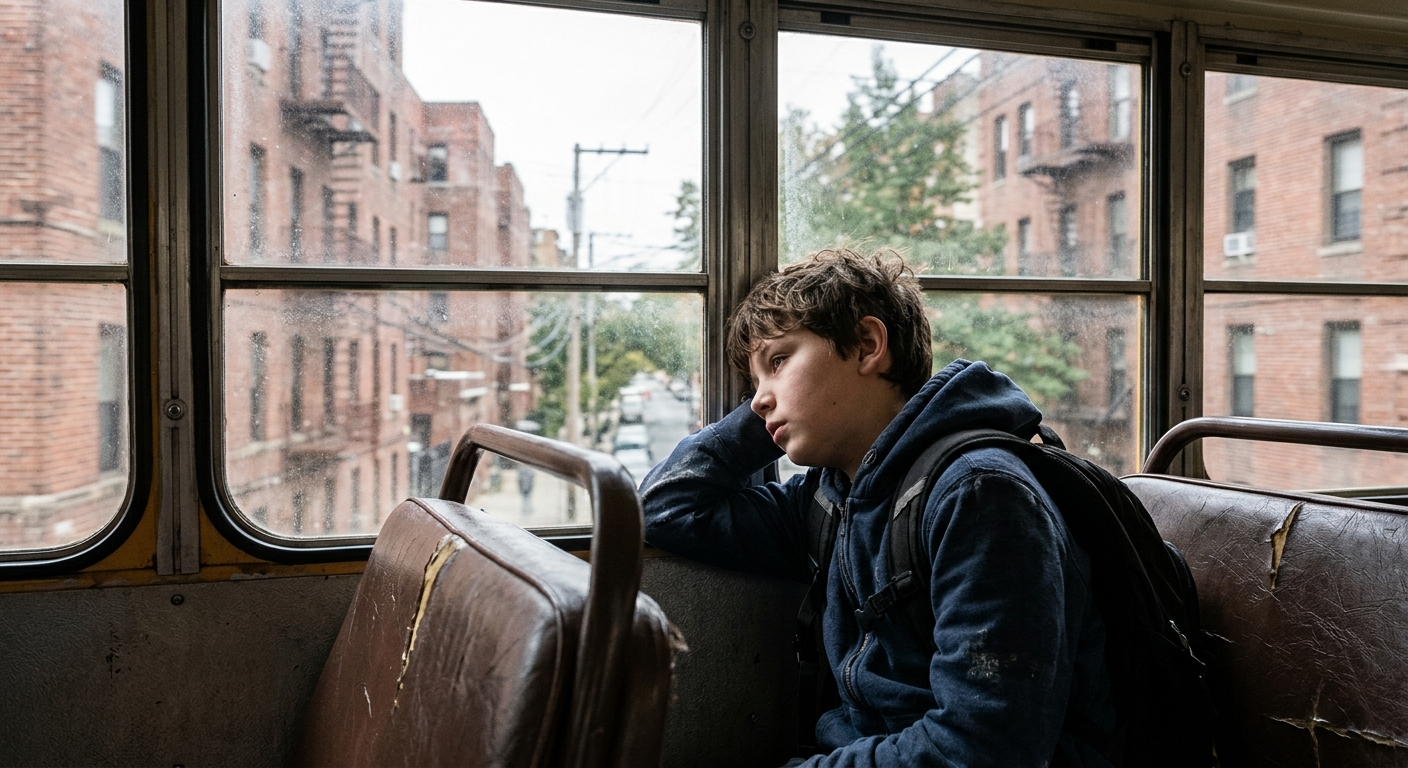
AI-generated illustration; not a photograph of the reported event.
- calendar_today October 27, 2026
Early Mornings and Ongoing Delays for One Student
Michael Mileto, an eighth grader living in Brighton Beach, starts his days much earlier than most of his peers. Each morning, he wakes up at 5:30 a.m. and boards his yellow school bus at 6:20 a.m. But despite his early routine, Michael often arrives at school well after the 8:15 a.m. bell. The reason: a school bus ride that regularly takes up to three hours.
Impact on Academic Performance and Social Life
Michael, who has a speech language disability, attends a private school on the Upper East Side at the city’s expense because local public schools could not meet his needs. However, the lengthy commute overseen by the city's education department has significant consequences. "He’s missing math, literacy, main subjects," says his mother, Annie Mileto. Though teachers work with him to make up for missed material, Annie worries that Michael is missing experiences alongside his classmates and falling behind.
Route Changes and Overcrowded Buses
This year has brought notable changes for Michael. Previously, his commute meant a 6:45 a.m. pickup and a timely arrival. Now, his bus route includes additional stops to accommodate children attending a different school in Manhattan, forcing an earlier pickup and later drop-off for him. As a result, there have been days when Michael reached school as late as 10 a.m. "Now all of a sudden, they just decide to, like, make my school late," he said.
Citywide Transportation Challenges and Driver Shortages
Michael's experience is not unique. At the start of the school year, around 2,000 students across New York City had no assigned bus driver due to widespread shortages. The city responded by offering pre-paid rideshare options, purchasing additional buses, and encouraging bus companies to hire more drivers. Randi Levine, policy director at Advocates for Children, noted that many families still lack reliable transportation, while others are dealing with overcrowded buses and increased delays.
Complexity of Student Bus Routes
The complexity of student bus routes has grown, often leading to less efficient commutes. "There are times when it is most efficient to have children on the same bus, going to two different nearby schools, and we’ve seen that in past years," said Levine. "But what we’re seeing this year, in some cases, is that routes that were probably meant to be separate are being combined." This consolidation has made certain routes, like Michael’s, considerably longer.
Search for Solutions
The education department has responded by reviewing cases such as Michael's, examining GPS data and identifying delays to see if improvements are possible. Meanwhile, Michael is left trying to catch up with lessons and homework after his long bus commute, often arriving home as late as 6 p.m. "I always feel tired and drowsy. Like, I just want to go to bed, but I have to do my homework," he said. Despite understanding the challenges, he hopes for changes: "I know it’s not their fault, but I think they should do better."
Source: ny1.com.