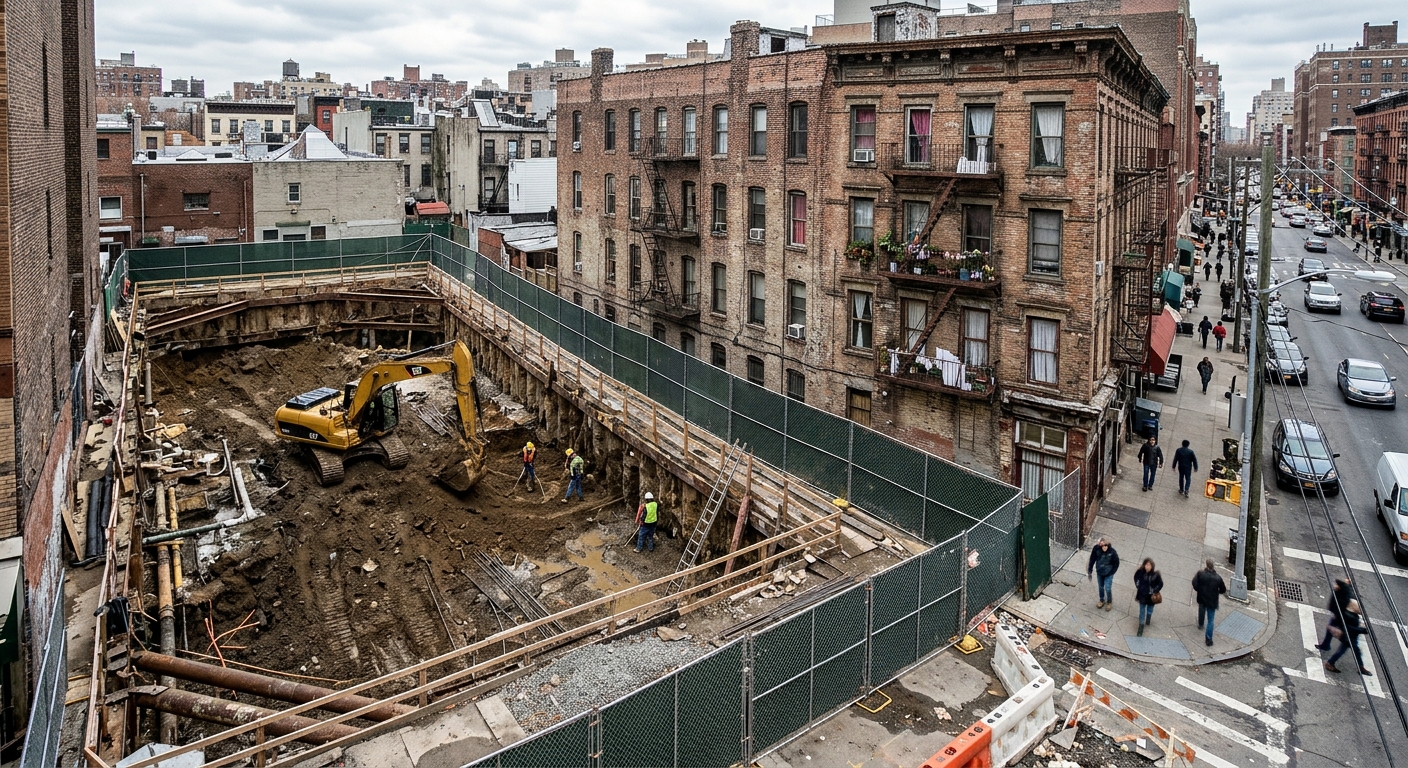
AI-generated illustration; not a photograph of the reported event.
- calendar_today November 15, 2026
Fatal Brooklyn Building Collapse Prompts Scrutiny of Approved Excavation Plans
The recent collapse of an apartment building in Brooklyn, which resulted in eight fatalities and 18 injuries, has led to questions over the adequacy of city-approved excavation plans at the construction site. Review of official building records shows that the plans did not require crews to install additional bracing to support the adjacent structure.
Approved Excavation Measures and Absence of Steel Bracing
According to submitted documents, the excavation plans outlined a method of cutting into soil at a 45-degree angle away from the three-story apartment building's foundation to a depth of approximately 15 feet. While reinforcing steel buttresses, known as rakers, were mandated for every other building surrounding the site, the collapsed building at 1321 Flatbush Ave. was the only one not required to have such support in the engineering plans.
Expert Opinions on Structural Safety and Oversight
Three independent structural engineers reviewing the “support of excavation” plans expressed surprise that the Department of Buildings approved them without additional structural support. Abi Agheyere, a structural engineer and Drexel University professor, described the lack of shoring as "a recipe for disaster," noting the age and structural vulnerabilities of the 94-year-old building, which had a rubble foundation and visible facade cracks. Chris Cerino, past president of the Structural Engineers Association of New York, also stated he would have anticipated extra bracing or underpinning to support the building’s foundation.
Department of Buildings’ Response and Onsite Inspections
Andrew Rudansky, spokesperson for the Department of Buildings, defended the strategy as "standard industry practice," stating that similar excavation designs have safely been used elsewhere in New York City. He emphasized that the project engineer—in this case, Jieming Wang of LMW Engineering—holds responsibility for ensuring the safety of submitted plans prior to city exam. Rudansky explained the plans underwent a full review and were found compliant with city requirements.
Records indicate that special inspector MD Islam monitored the excavation but requested to withdraw from the project following the collapse. The Department of Buildings has since issued a full stop work order at the site, attributing the incident to "unsafe construction operations." Investigations are ongoing by the Department of Buildings, the Department of Investigation, and the Brooklyn District Attorney’s office. The city is also inspecting other sites linked to the same contractors, now numbering 160 properties involving six entities.
Engineering Reports and Project Timeline
A preconstruction analysis by Quiver League, prepared by engineer Sepehr Rezaeimalek, described the adjacent building’s facade as being in "poor condition with noticeable cracks." However, inspectors noted limits to their assessment, as they could only view the building from the sidewalk and nearby properties due to lack of access to detailed structural information. A geotechnical report by Michael Karantinidis of International Geotechnical/Structural Laboratories Inc. evaluated soil and rock conditions before excavation began.
The excavation plans were submitted for approval in December 2025 by Wang, with initial designs for a three-story apartment building. In September, a revised plan was submitted to construct a nine-story complex, but this had not yet received approval at the time of the collapse. Development records indicate a previous stop-work order at the site had been ignored earlier in the year.
Industry Debate Over Bracing and Proper Excavation Practices
While some engineers insist that bracing is crucial, others argue that steel reinforcement is not always necessary when excavation is performed correctly. Eugene Gurevich of RAND Engineering & Architecture stated that as long as work does not extend under the existing foundation, additional steel may not be required. However, Paul Capurso, Executive Secretary-Treasurer of the Carpenter’s Union, speculated that crews might have dug deeper than planned to prepare for a larger building, deviating from approved blueprints.
As investigations proceed and citywide construction oversight intensifies, the debate continues on the sufficiency of current review standards and the necessity of additional safeguards in major excavation projects.
Related coverage
Source: gothamist.com.