- calendar_today September 1, 2025
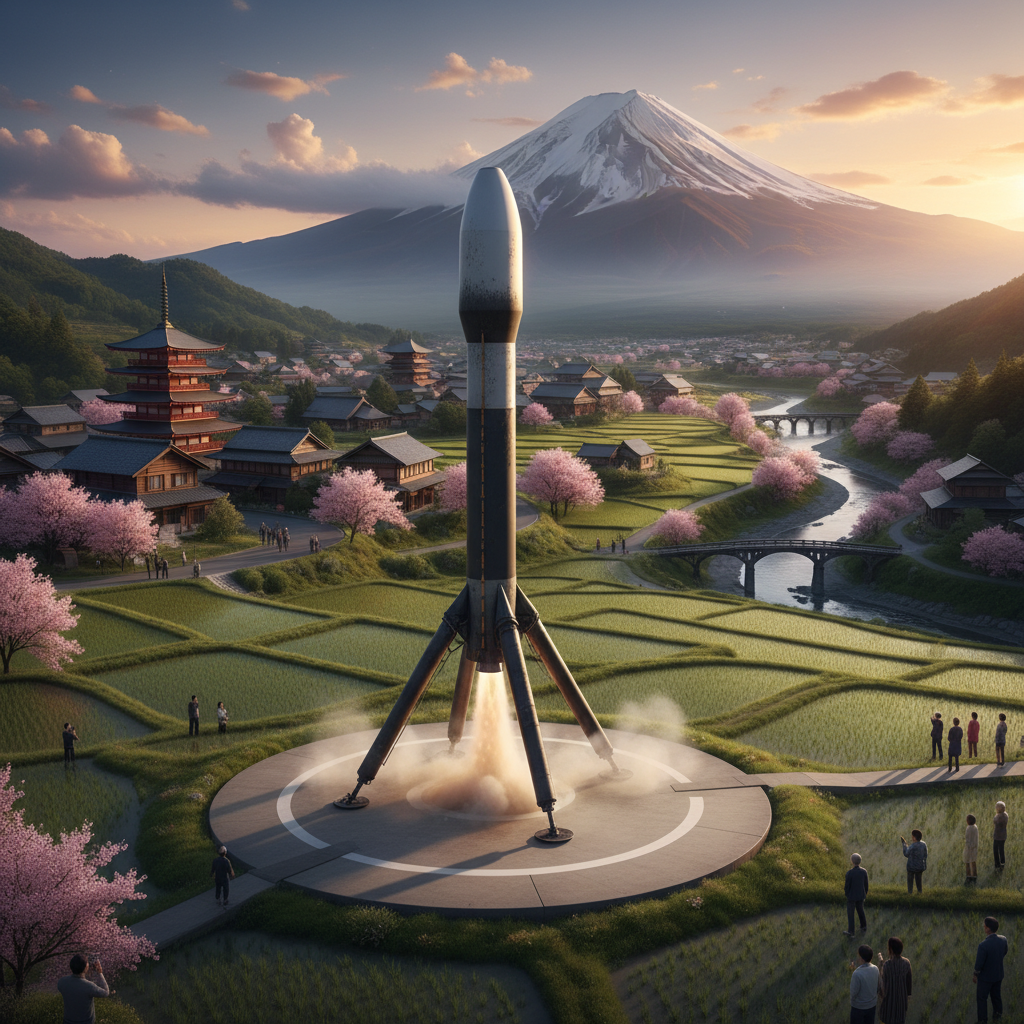
Honda has taken a big step forward in the next phase of its technological advancement, the company announced earlier this week. An experimental launch and landing of a reusable rocket were carried out in Taiki Town, Japan.
This was the first-ever rocket landing for the automaker, marking the latest phase of Honda’s path into a new industry.
According to the press release, the rocket achieved a maximum altitude of 890 feet before it returned to earth with a soft landing. The four-legged rocket landed just 37 centimeters from its targeted spot. Honda’s attempt proved its engineering and automation capabilities were applied to the next frontier.
The 20.5 feet tall rocket weighed more than 2,800 pounds at takeoff. It was up in the air for 56.6 seconds before returning to the ground. In those 56.6 seconds, it was able to fly vertically with no lift, and it executed its landing without wobbles.
The rocket’s four legs — retractable during liftoff — served two functions. First, they acted as the vehicle’s support system when the rocket launched. Second, they helped to ensure a balanced and stable landing. That achievement marks a milestone for an automaker that had no legacy in space exploration until recently.
This isn’t news to many, but this isn’t Honda’s first endeavor into space. The company announced its intention to develop rockets back in 2021. However, it hasn’t publicized much about its rocket development since then.
What makes this rocket development stand out is Honda’s approach to its new business. Rather than spending resources on cutting-edge rocket technology, Honda relied on technology from another business. Specifically, Honda has applied its technology in the auto industry to guide its path in space.
Those technologies included automated driving systems, which were originally developed to keep drivers safe on the road. The automation and high-precision techniques were later used to navigate and control the rocket.
Why Rockets?
The move to space isn’t a bragging right. Honda is doing it for a reason. In fact, Honda highlighted three reasons for its venture into the new industry.
First, the satellite business could support several of its businesses, including connected vehicles, logistic, and automated driving systems. With satellites becoming crucial to communications, data, and vehicle navigation, an in-house launch service could provide a distinct advantage to its future businesses.
However, the automaker is being cautious about its potential in the space industry. The company stated that its rocket project is still in the fundamental research stage, and there is no decision on commercializing the technology.
“Although Honda rocket research is still in the fundamental research phase, and no decisions have been made regarding commercialization of these rocket technologies, Honda will continue making progress in the fundamental research with a technology development goal of realizing technological capability to enable a suborbital launch by 2029,” the company said.
Aiming to Achieve a 2029 Suborbital Launch
Honda is aiming to achieve a suborbital launch by 2029. What is a suborbital launch? According to NASA, a suborbital launch crosses the Kármán line — roughly 62 miles above the Earth’s surface. However, it doesn’t enter an orbit around the Earth.
It’s an exciting step in the space industry and can serve as a platform for further testing, satellite payload development, and possibly even manned missions.
But to put a satellite into orbit, a more powerful and sophisticated system will be needed. For that, Honda will need to have the capability to handle a more robust rocket and its control system. However, the automaker didn’t say if it would venture into the highly competitive orbit launch industry, where heavyweights like SpaceX and Blue Origin compete.
However, the automaker has proven its determination to go beyond a test. The test showed that Honda can fly and land a rocket. And with the success in hand, it has the data to support its goal.
Taiki Town, where the rocket was launched, has become the hub for Japan’s space exploration industry. Local governments, JAXA, and private entities have contributed to the evolution of Taiki Town into a space town.
Honda’s partnership with Taiki Town highlights the potential synergy between the corporation and local businesses. The effort will contribute to further Japan’s space industry.
Final thoughts
For Honda, it’s just the beginning. Whether or not it will decide to venture into the commercial launch business, its rocket landing has earned a position in a new group of private companies in the space industry.
For the next five years, it will need to perfect its technology and decide if it wants to pursue the launch service business. If it decides to move forward, the competition will be fierce. Otherwise, it will need to make a decision on whether it will maintain its status as a one-time private space company.