- calendar_today August 17, 2025
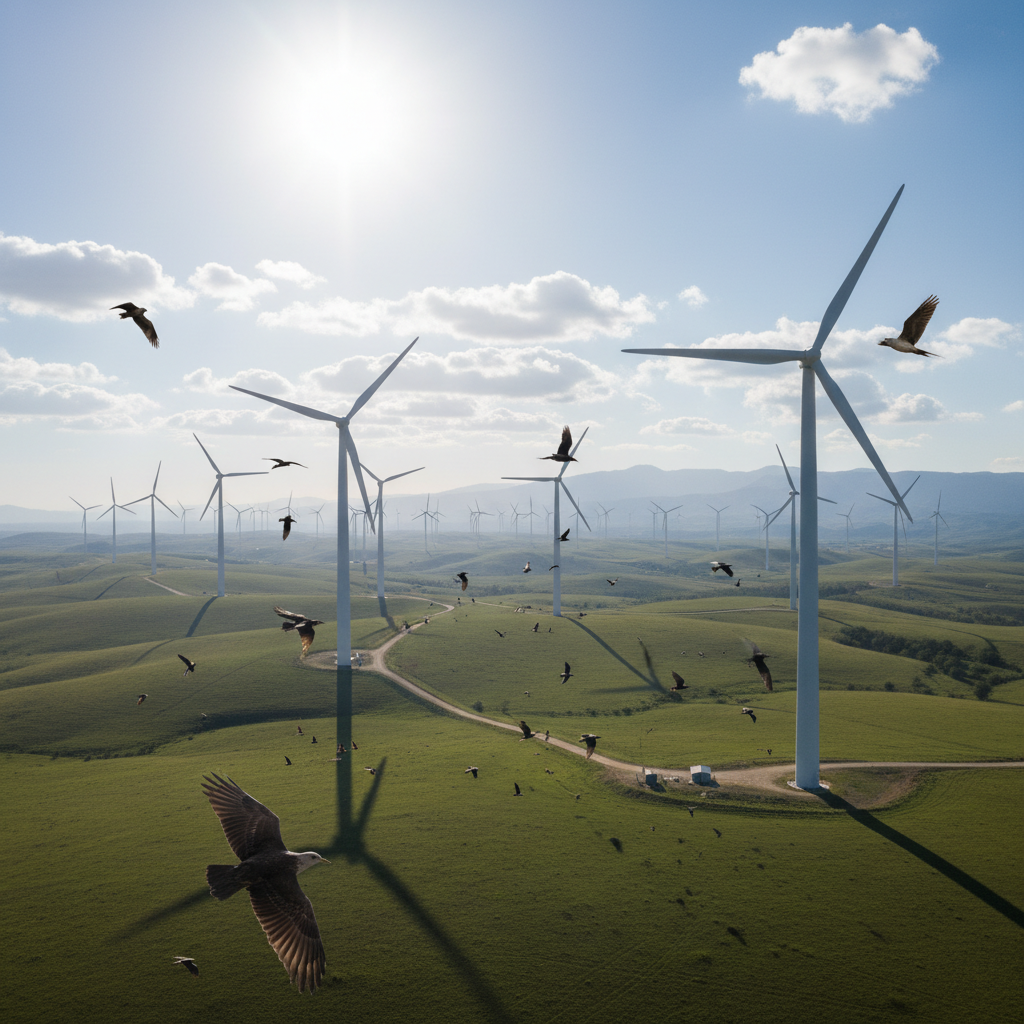
President Donald Trump’s recent condemnation of wind turbines as bird-killers that drive whales “loco” and spew dangerous particles into the air may have seemed like more of the same. (His next breath promised some sort of nuclear future.) But Trump is also tapping into a complex global conspiracy theory history that has followed wind energy long before he became president.
The label “windmill” is shorthand for a lot of interrelated climate denial beliefs. And his latest pronouncements will fuel a movement whose adherents often remember the threat of renewable energy being pushed as a political doctrine and not just media noise. After all, back in the 19th century, people warned that telephones spread germs and drove the poor “loco,” too.
The tweets and speeches may seem off the cuff, but they are also based on an echo chamber of often paranoid anti-wind energy claims. Efforts to counter them may be complicated by new research showing that once worldviews are primed to be anti-science or anti-government, fact-checking and logic have limited power to change minds.
Myths about Wind Farms and Conspiracy Theories
Concerns about wind turbine dangers date back more than a century, according to the U.S. Federal Emergency Management Agency. However, while climate science has predicted since at least the 1950s that emissions of carbon dioxide could cause profound and relatively soon-to-come environmental change, for years, the early renewables industry sold itself largely as a populist weapon with which to fight the fossil fuel industry.
On the left, in some of the very early debates over the potential for clean energy as a political and policy choice, renewable technologies were framed as consumer options to undercut Big Oil. The Simpsons offers a classic cultural reference point: In one episode, Mr. Burns, the local coal tycoon, builds a tower that blocks the sun, then forces the town of Springfield to buy his nuclear power. It was an exaggerated satire, but also an apt metaphor at the time. The real concern was that fossil fuel companies had the power and the money to delay the inevitable as long as possible.
In 2004, for example, then–Australian Prime Minister John Howard invited fossil fuel executives to a group, the Low Emissions Technology Advisory Group, to find out how to best stop or at least slow the growth of renewables.
Wind Turbines Become Targets for Conspiracy Theories
Criticism of wind farms’ environmental credentials is just one part of the problem. One of the common charges against them has been the supposed “wind turbine syndrome,” which an expert commission described as a “non-disease.” Scientific evidence for such fears is sparse, and some, like blackbird deaths, are mostly taken care of by technology design (eg, keeping blades below certain heights).
Research suggests people’s climate-change conspiracy beliefs are linked to support for the fossil fuel industry: Wind farms, however, are only a small part of the picture. Solar power and energy storage, and efficiency are also targets, and those technologies don’t leave giant concrete bases and crisscrossing cables visible to the public.
Wind farms provide an excellent visible target for those concerned about Big Energy in general and for deniers concerned about potential environmental impacts in particular. They are often sited on ridgelines or open plains. The old coal mines and oil fields, and nuclear power plants were mostly underground or sited far from population centers; wind turbines are often in places that people drive past or can see out their kitchen window.
The Birth of the Wind Turbine Conspiracy Theories
Fueling wind farm opposition have been worries about property values, noise, and health, as well as more fantastical beliefs about the spread of diseases like Covid-19 (as happened in this video, which went viral on Facebook). Most recent reports show that the most consistent demographic feature of conspiracy supporters isn’t age, gender, education level, or even political affiliation. Instead, people with high levels of belief in conspiracies about climate change and other issues are much more likely to see wind energy in a negative light, too.
The Other Factors Fuelling the Wind Conspiracy Theories
Wind turbines and renewables, including solar power, have become associated with some of the most rapid changes in electricity markets in history. To those who oppose them, this fast rate of change can make clean energy seem out of control, but it’s also been a selling point to supporters.
Sustainability is entangled with identity and culture, with deep layers of emotion and psychology. Climate science has made wind turbines a lightning rod. There’s a connection to that wealth, the “good life” of the fossil fuel era, and the unwillingness to turn that success on its head or consider its downside, what scholars call “anti-reflexivity.” Trump taps into that by his style, his nostalgia for the coal, oil, and gas years, and the comments he made at the EU trade deal conference.
The very visible wind farms may provide a focal point for some of the frustration and helplessness. Wind energy technologies are markers of change, whether they are symbols of modernity or progress, hope, or sustainability. But for others, they represent lost control, loss of identity, and encroachment. Under the surface of wind farm disputes are these much larger political, cultural, social, and psychological changes.
The Reaction to the Conspiracy Theories
Opposition to wind farms, according to Winter et al., is not the result of ignorance or misinformation but instead “rooted in people’s worldviews.” Once people have formed an opinion on the topic, they choose data that supports their view and discount the rest.
Efforts to tackle climate-change denial and conspiracy theories in the public domain may be useful to some extent. But trying to turn back that windmill after these specific ideas about clean energy have taken root may be very difficult and very costly.