- calendar_today August 10, 2025
In 2025, the United States introduced sweeping tariff measures, including a 104% tariff on Chinese imports and a 25% tariff on automobile imports from various countries. These tariffs have disrupted global trade, and for New York’s investment community, this means rethinking strategies, from tech stocks to agriculture, and everything in between.
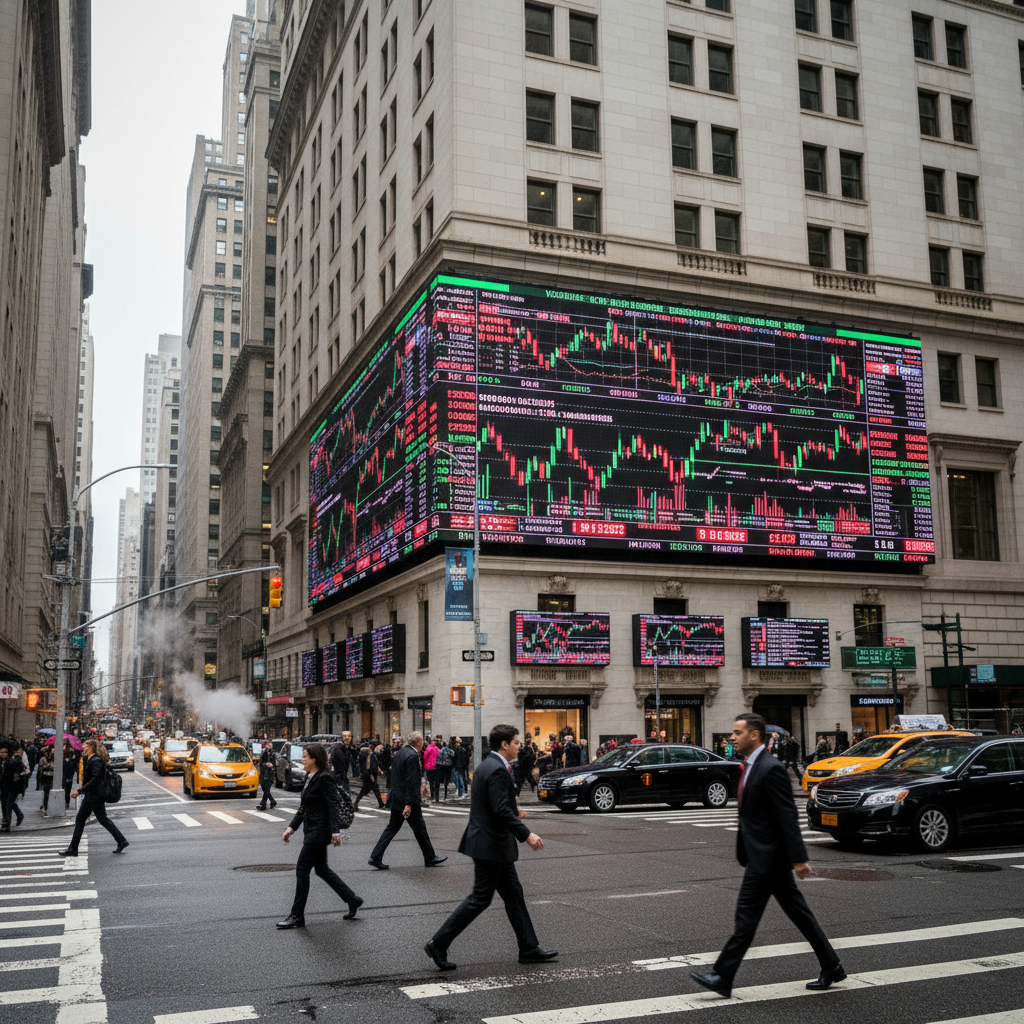
On the day the tariffs were announced, financial markets immediately reacted. Wall Street saw a staggering drop of over 2,200 points, and the S&P 500 slipped nearly 10%. For investors in New York—where financial services, tech industries, and manufacturing play such pivotal roles—this kind of volatility poses both risk and opportunity.
This blog examines how these tariffs are affecting New York’s economy and key sectors, and what investors need to know as they navigate the investment landscape in 2025.
The Economic Impact on New York’s Key Sectors
New York’s economy is vast, with heavy reliance on technology, finance, manufacturing, and consumer goods. These sectors have felt the impacts of the 2025 tariffs in significant ways.
Technology and Innovation
As a hub for technology and finance, New York is particularly exposed to global shifts in the tech industry. The imposition of a 25% tariff on semiconductors has directly impacted companies like Intel and Nvidia, both of which are central to the U.S. tech ecosystem. Companies such as Apple are also feeling the strain, with stock prices dipping by 7% in response to concerns about increased costs and supply chain disruptions.
New York’s tech investors are now rethinking the viability of their portfolios, as tariffs force tech companies to reconsider their supply chains. For many, this means a shift towards reshoring, even though it may come at a higher cost. “We’re seeing a fundamental rethinking of global logistics,” said trade analyst James Rowley. Companies are now weighing whether the long-term benefits of reshoring outweigh the immediate costs.
Manufacturing and Trade
New York’s manufacturing sector is also under pressure. Many manufacturing firms in and around the city depend on imports of machinery and parts, and the 25% tariff on foreign automobiles has raised costs for local producers. The auto industry, in particular, has frozen momentum. With car prices expected to rise, sales are expected to drop by 2 million units this year, putting further strain on local businesses involved in vehicle production.
Volkswagen, Ford, and General Motors are all recalibrating their production strategies, leading to uncertainty in stock prices and a broader slowdown in manufacturing output.
Agriculture and Raw Materials
While New York is not a major agricultural producer compared to other U.S. states, its agricultural trading ties to global markets make it vulnerable to the effects of tariffs. For instance, U.S. agricultural exports—especially those from states like Kansas and Iowa—are being hit by retaliatory tariffs, particularly from China. The 34% tariff on key agricultural products like soybeans, corn, and pork is affecting U.S. farmers who have already been struggling with inconsistent demand for years.
Agricultural exports for FY2025 are forecasted at $170.5 billion, which is lower than pre-tariff forecasts. While these tariffs primarily affect the Midwest, New York investors who are tied to agricultural commodities are also seeing the negative impact on farm profits and trade flows.
Investor Sentiment: Caution Amid Uncertainty
The U.S. tariff measures have led to a volatile market environment. Following the tariff announcements, the Dow Jones plummeted, and the S&P 500 approached bear market territory. Technology-heavy indices like the NASDAQ have also taken a hit, with investors retreating into safer assets.
Gold, for instance, rose 1% to $3,010.39 per ounce as investors sought refuge in precious metals. In this uncertain climate, New York investors are shifting their focus to commodities, real estate, and other inflation-protected assets.
“We’re in wait-and-watch mode,” said Erin Simmons, strategist at JPMorgan Asset Management. “No one wants to catch a falling knife in this climate.” This sentiment reflects the caution permeating New York’s investor community.
Short-Term Strains and Long-Term Uncertainty
In the short term, U.S. consumers will likely face higher prices on many goods, including smartphones and cars. Economists warn that if the tariffs persist, stagflation—a combination of high inflation and stagnant growth—could set in. This would create a challenging economic environment for both consumers and businesses.
Looking ahead, supporters of tariffs argue that they could revitalize U.S. manufacturing by strengthening domestic supply chains and creating more jobs. However, critics argue that the global economic disruption and the risk of a recession may ultimately outweigh these potential gains.
For investors in New York, navigating these uncertain waters will require more than just patience—it will demand strategic agility and diversification.
What New York Investors Should Watch in 2025
The tariffs in 2025 are no longer a minor policy issue—they’ve become a central force reshaping market sentiment and decision-making for investors. As the situation evolves, smart capital is gravitating toward domestically anchored sectors, such as U.S. manufacturing, infrastructure, renewable energy, and reshoring-focused industries.
At the same time, sectors heavily dependent on global supply chains—like technology and consumer goods—are being carefully scrutinized. As each new tariff, countermeasure, and political development unfolds, New York investors must stay agile.
In a year of uncertainty, diversification and adaptability will prove invaluable. The ability to pivot in response to changing policies will be essential for investors looking to not only survive but thrive in 2025.