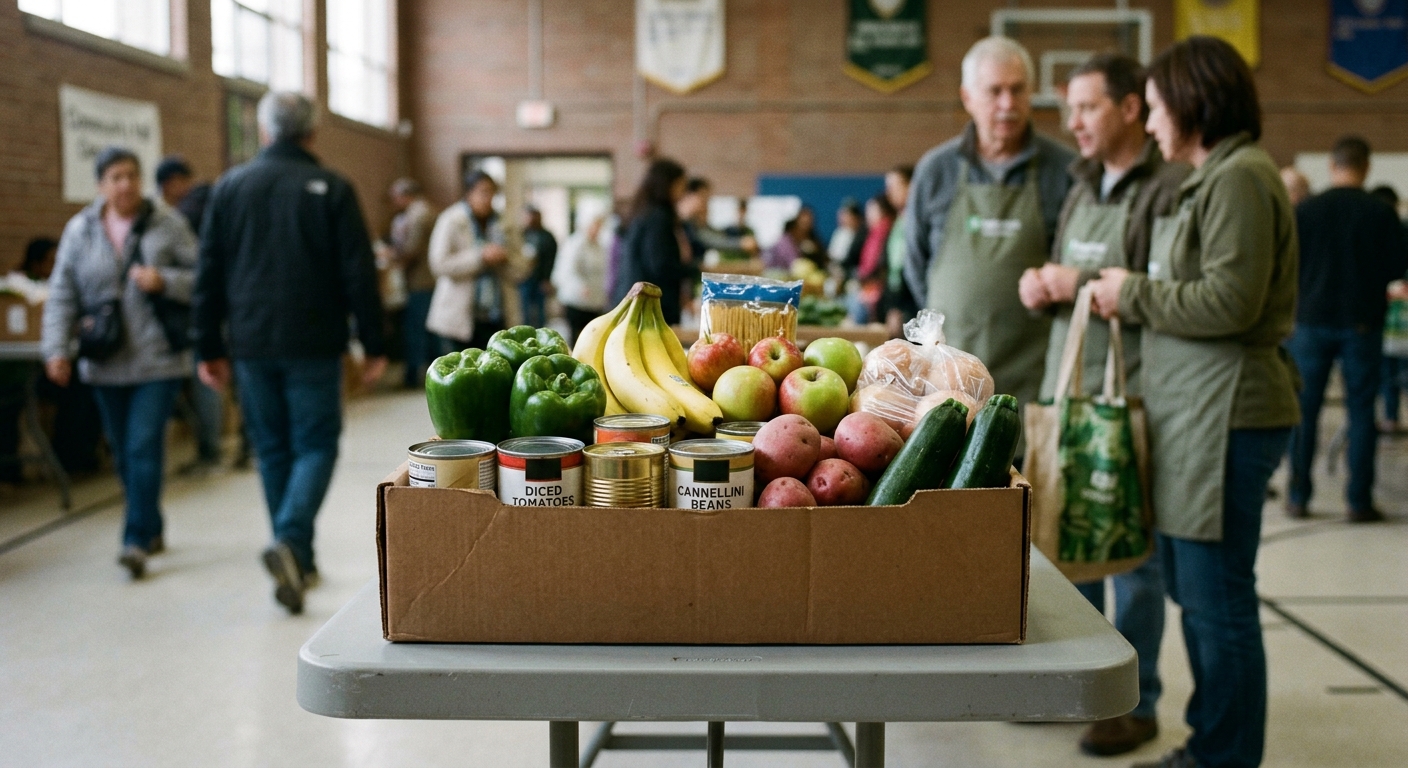
AI-generated illustration; not a photograph of the reported event.
- calendar_today November 16, 2026
Food Insecurity Persists Among Working New Yorkers
According to a recent report by the Robin Hood Foundation, a significant number of New Yorkers who depend on food pantries are employed but still unable to earn enough to adequately feed their families. The findings underscore the extent to which food insecurity remains a critical issue in New York City.
More Than Half of Pantry Users Are Working
The Robin Hood Foundation's data, collected from food pantry users in 2025, reveals that more than 1.3 million New Yorkers visited food pantries last year. Of those, over half were either working themselves or living with someone who worked. Specifically, 39% reported working full time, 12% worked part-time, and an additional 4% had a working spouse or partner. The remaining users primarily cited health reasons or age (65 or older) as reasons for not working.
“Work really isn't a guarantee against hunger. Many New Yorkers are working. About 55% are either working themselves or living with a family member who works, and they're still having a hard time making ends meet,” said Sarah Oltmans, chief of grant strategy for the Robin Hood Foundation.
Impact of Federal Policy and Financial Shocks
The report comes amid changes to federal food assistance programs which have further challenged food-insecure populations. More than 26,500 New Yorkers have lost monthly assistance this year due to new work requirements for SNAP (Supplemental Nutrition Assistance Program) benefits. Furthermore, fewer families are applying for the benefit, signaling possible barriers or fears associated with these policy shifts.
Almost half of those who visited food pantries last year also experienced financial shocks, such as major unexpected costs, job loss, or decreased income, exacerbating their need for support.
Broader Trends: Growing Reliance on Emergency Food and Strain on Households
The report found that 15% of New Yorkers relied on food pantries in 2025—a slight increase from the previous year. Rising food insecurity in the city means that one in three residents either ran out of food or were worried about running out during this period.
According to Leslie Gordon, CEO of the Food Bank of NYC, as policy changes to programs like SNAP and Medicaid take effect, the situation may worsen. Families are resorting to various strategies, including skipping meals, depending on friends and relatives, and incurring debt to make ends meet. "By the time individuals and/or households turn to our food assistance network, they've already exhausted a lot of these other coping strategies," Gordon noted.
Eligibility Barriers and the Public Charge Rule
Undocumented New Yorkers are ineligible for SNAP, though their U.S. citizen children qualify. However, recent changes to how immigration officials consider public assistance in green card and visa applications—referred to as the public charge rule—have discouraged some families from applying for benefits they are entitled to. Increased immigration enforcement and policy shifts have contributed to this "chilling effect."
City Response and Limits of Charitable Aid
This year, the Mamdani administration increased funding for 700 food pantries through its Community Food Connection program and began offering pet food at 22 locations. Yet, advocates stress that food pantries alone cannot resolve citywide hunger. As Gordon explained, "For every one meal provided by a food pantry, SNAP provides nine." This emphasizes the importance of robust federal programs alongside local initiatives in addressing food insecurity in New York City.
Source: gothamist.com.