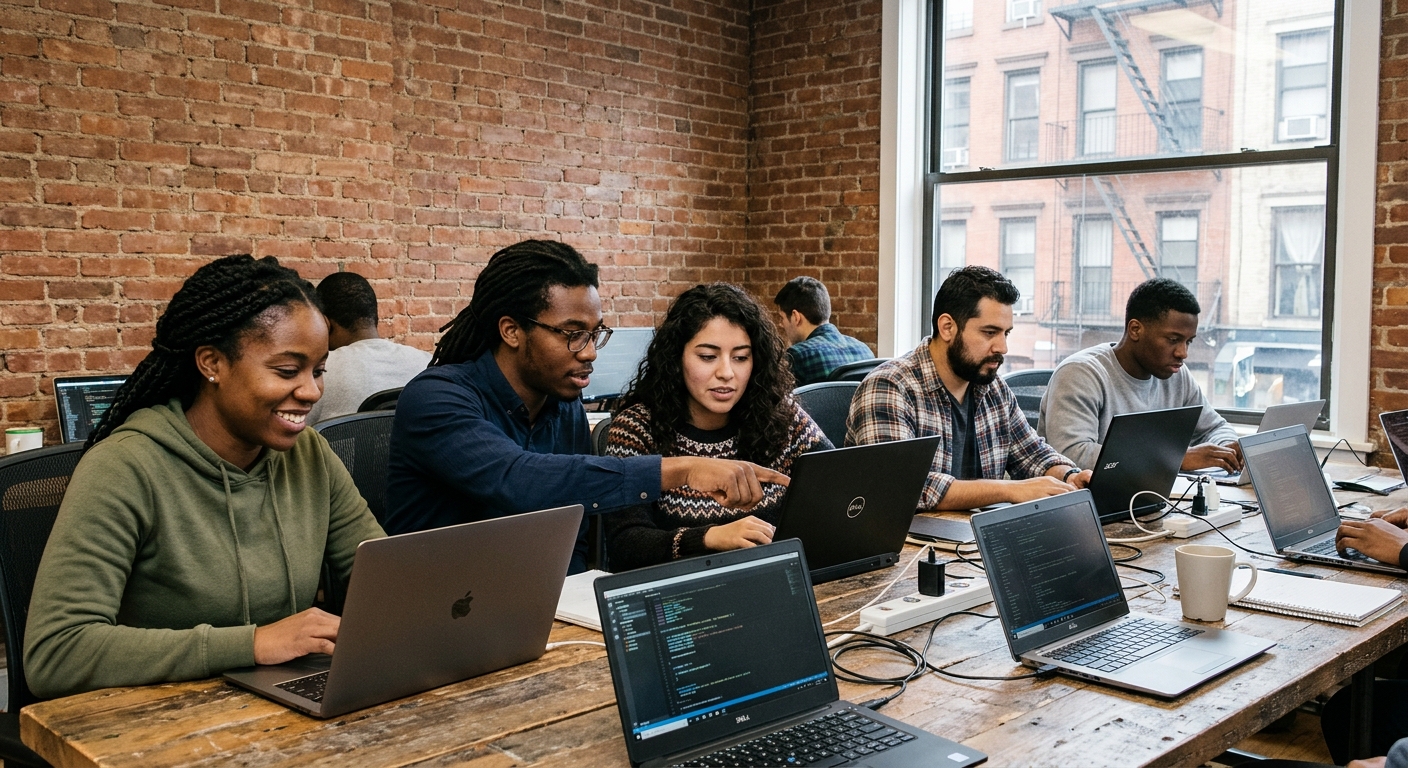
AI-generated illustration; not a photograph of the reported event.
- calendar_today November 15, 2026
Artificial Intelligence and the Push for Inclusive Innovation
On a recent afternoon in Manhattan, Claira, an artificial intelligence agent, addressed an audience about how AI can serve as a personal assistant. As the first Afro-Latina, multilingual virtual assistant on the market, according to inventor Abran Maldonado, Claira represents recent attempts to diversify the AI landscape. Maldonado emphasized that Claira’s creation was intended to inject multicultural perspectives into technology spaces often lacking Black and brown representation.
Latino AI Summit and Community Initiatives
Claira helped keynote last week’s Latino AI Summit at Civic Hall and Berkeley College in Midtown, attended by dozens—mostly Latino and Black professionals. The event is part of a growing movement in New York to empower communities typically left on the sidelines of tech, providing opportunities to learn about AI’s workforce impact and develop personalized tools for both daily life and occupational use. Similar local efforts include The Knowledge House in the Bronx, offering coding and design training for underserved youth, and the Rev. Al Sharpton’s AI Fluency Initiative, which educates adults without tech experience about AI basics in order to bridge the digital divide.
Concerns About AI’s Impact on Jobs
Despite these initiatives, early research shows concerns about the rapid rise of AI, especially its potential for job displacement among Black and Latino workers. A report from the McKinsey Institute for Economic Mobility indicates that Black employees are overrepresented in occupations—transportation, production, and administration—most susceptible to automation. A 2025 Jobs for the Future study found that 67% of Black respondents felt AI was already impacting their jobs, compared to 57% of white respondents. Many Black respondents also felt pressure to gain new skills and already used AI tools regularly.
Latinos similarly face underrepresentation in the tech industry. While making up about 19% of the U.S. workforce, Latinos hold only 3% of board seats, 5% of executive leadership roles, and 6% of technical jobs at the largest tech firms, the Kapor Foundation reports.
The Need for AI Literacy and Education
Advocates like Maldonado suggest that staying competitive in this evolving landscape requires AI literacy. He advises jobseekers to add proficiency in current AI tools such as Claude, Codex, and Google AI Studio to their resumes and to update their skills regularly. Some schools are responding: Alpha School, operating in various locations, offers K-12 students AI tool training. According to Maldonado, students in such programs achieve exceptional fluency and literacy, but technology experts insist this education must be made accessible across all demographic groups to prevent further inequality.
Taylor Shead, an AI-driven education company founder, stressed the need for equity in tech education, arguing that resources must reach Black learners and workers within the systems they are part of, rather than relying on later interventions.
Voices from Within: Navigating Opportunity and Inequality
Community perspectives remain mixed. Fradely Delacruz, a computational scientist student, told attendees at the Latino AI Summit that women of color are “rapidly losing our jobs in the STEM space and the research and development space,” a trend she attributes to existing systemic issues intensified by AI. Delacruz called for broader access to knowledge about emerging technologies, pointing out that by the time many hear about innovations, decisions have already been made without their input.
Entrepreneur David Gabeau, who recently moved to San Francisco after years in New York, expressed fear that AI will widen racial inequity and concentrate wealth. He illustrated his concern by describing a research session where Black and brown participants helped train AI with little expected benefit for themselves.
Experts Weigh In: Preparing for an Uncertain Future
While some worry about the potential for AI to exacerbate racial income gaps, others, such as Kara Emery of NYU’s McSilver Institute for Poverty Policy and Research, emphasize the power of policy, education, and representation in guiding AI’s impact. Emery noted that although projections warn of increasing inequity, the communities affected are not passive—they are actively preparing, innovating, and advocating for their interests.
As artificial intelligence and its associated workforce impacts continue advancing, New York’s Black and Latino communities, alongside allies and advocates, are working to ensure inclusive innovation while addressing concerns about job displacement and digital divide. The outcome remains uncertain, but the push for equity and access is unmistakable.
Source: gothamist.com.