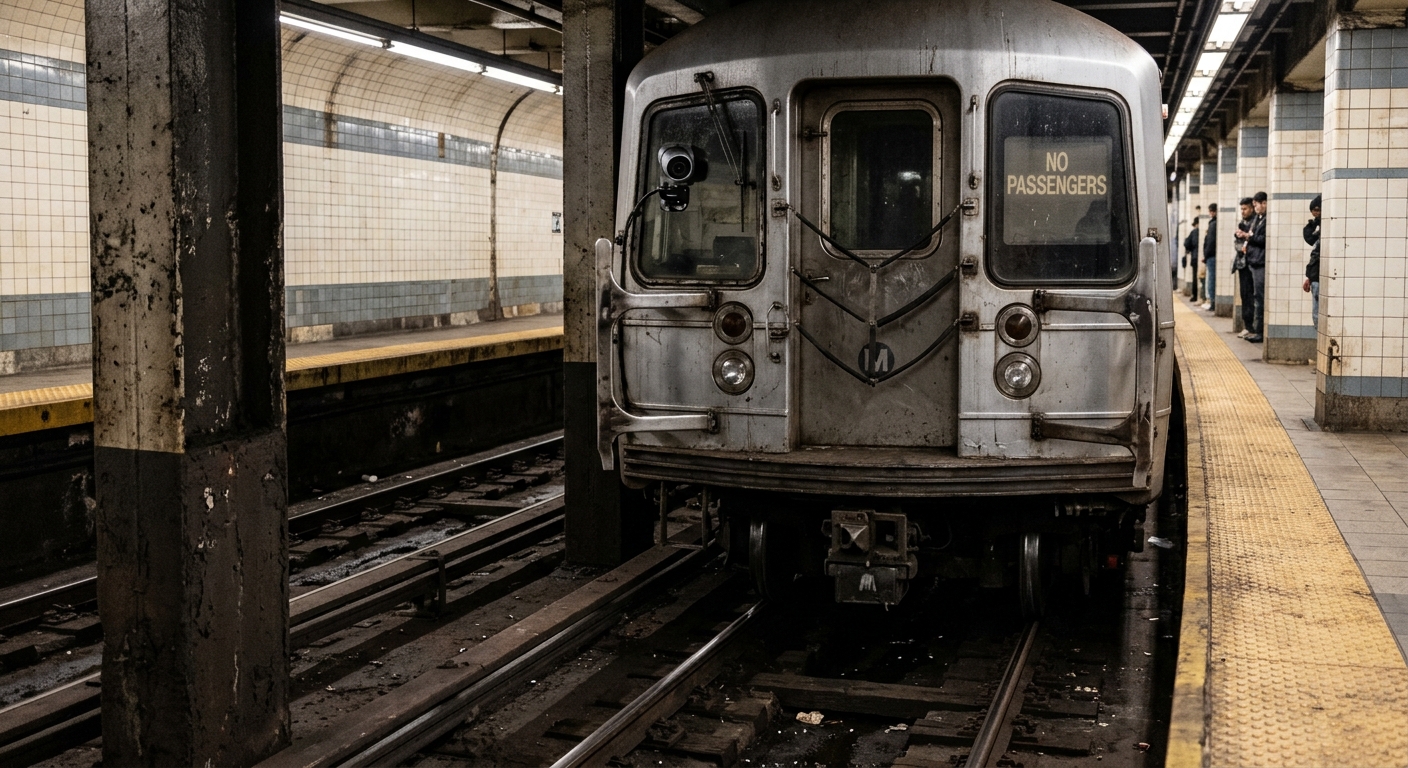
AI-generated illustration; not a photograph of the reported event.
- calendar_today November 13, 2026
MTA Plans Pilot of AI-Powered Cameras on Subway Trains
The Metropolitan Transportation Authority (MTA) is exploring the use of artificial intelligence to enhance passenger safety by detecting hazards on subway tracks. According to documents published by the agency in October 2026, the MTA is seeking a vendor to install an AI-enabled camera system on the front of a subway car. The goal is to test whether these cameras can automatically alert train operators to people or objects detected on the tracks, potentially preventing dangerous incidents.
How the AI Camera System Would Work
The proposed system uses artificial intelligence cameras mounted on the lead car of the train. These cameras would continuously monitor the tracks for people, debris, or other obstructions. If a hazard is detected, the system would immediately alert the train operator, allowing them to respond quickly. The technology also aims to monitor and track erratic passenger movements near platform edges, offering an additional layer of safety for those waiting for trains.
Safety Concerns Driving Technological Upgrades
The MTA's move to test this AI subway safety initiative comes in response to a series of incidents involving track intrusions and fatalities. In 2021, the MTA reported that 68 people died while trespassing on subway tracks. Earlier in 2026, an MTA track worker died after being struck by a train, and several cases of individuals being pushed or falling onto tracks have raised safety alarms in recent years. These incidents have spurred the agency to seek new safety technologies, including AI-based track hazard detection systems.
Investment and Testing Timeline
The agency plans to invest between $5 million and $10 million in a pilot project for the new technology. After the test phase concludes, the cameras will be uninstalled while the MTA assesses the effectiveness of the system and decides whether to implement it across its entire subway fleet. The project aligns with a broader agency commitment, as described by MTA spokesperson Michael Cortez, to explore emerging technologies that enhance safety and reliability within the transit system.
Efforts to Combat Track Trespassing and Improve Safety
The challenge of preventing track trespassing has been on the MTA's agenda for several years. The agency previously launched a special task force to examine solutions for track intrusions. Under the direction of Governor Kathy Hochul, the MTA has also installed metal barriers on sections of platforms at over 150 subway stations to improve subway platform safety. On a national level, the Federal Railroad Administration awarded a $32 million grant in 2024 to transit agencies for developing technologies focused on keeping people off train tracks. The nonprofit Transportation Research Board also developed a similar AI-based detection system that same year.
Next Steps and Long-Term Goals
If the pilot program proves successful, the MTA could expand the use of artificial intelligence cameras to all subway trains. The agency's long-term goal is to reduce the number of track-related incidents and fatalities, protecting both passengers and workers. The current initiative represents the latest in a series of transit safety measures designed to address ongoing concerns about track trespassing prevention and train hazard alerts in New York City’s vast subway system.
Source: gothamist.com.