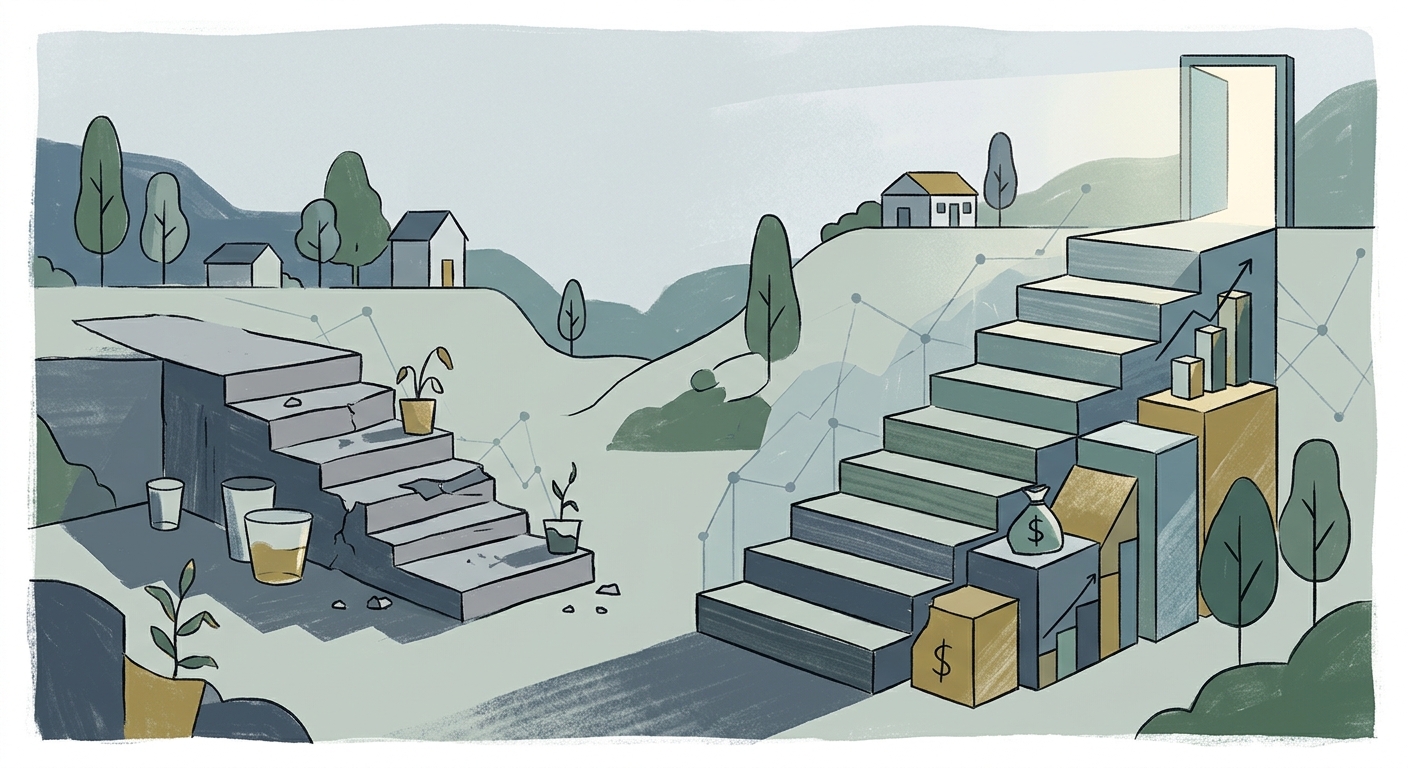
AI-generated illustration; not a photograph of the reported event.
- calendar_today November 13, 2026
Retirement preparedness in the United States continues to reflect significant disparities across different demographic groups, according to recent data from the Federal Reserve. The proportion of adults who believe their retirement savings are on track remains relatively low and demonstrates marked variation by income, age, race, disability status, and gender.[1]
Demographic Gaps in Emergency and Retirement Savings
Federal Reserve reports show that, as of 2025, just 35% of non-retired adults considered their retirement savings to be on track—a figure largely unchanged from the previous year and still below the rates observed in 2021.[1] This headline measure masks wide differences among population groups. For example, adults in higher income brackets are much more likely to have sufficient rainy day funds and designated retirement savings. In 2025, 75% of adults with family incomes of $100,000 or more reported having emergency savings to cover three months of expenses, compared to just 21% among those with incomes below $25,000.[1] Similarly, 89% of non-retirees in the highest income group had tax-preferred retirement accounts, while only 15% of those in the lowest income bracket did.[1]
Older adults were more likely to be financially prepared for retirement. For example, 71% of those aged 60 and over had emergency savings, compared to 37% of those aged 18–29.[1] Race and ethnicity also play a significant role: Recent data shows that White and Asian Americans are more likely to report having sufficient emergency funds and retirement accounts compared to Black and Hispanic Americans.[1] Specifically, 69% of White non-retirees had tax-preferred retirement accounts, compared to 49% of Black and 46% of Hispanic non-retirees.[1] The disparity is similarly reflected in the share reporting their retirement savings are on track—43% for White, 23% for Black, and 24% for Hispanic adults.[1]
Additional Disparities by Disability and Gender
Adults with disabilities are less likely to have both emergency and retirement savings. Only 40% of adults with a disability reported having emergency funds for three months, compared to 60% among those without a disability.[1] Among non-retirees with a disability, just 34% had a tax-preferred retirement account and only 15% felt their savings were on track.[1] Benefit structure and employment barriers likely contribute to these outcomes, as means-tested supports can discourage asset accumulation.[1]
Gender differences, while less pronounced than those for race and income, are still present. Men are more likely than women to have emergency savings and to feel their retirement plans are on track (39% of non-retired men vs. 32% of non-retired women say they are on track for retirement savings).[1]
Sources of Retirement Income and Financial Security
Looking at sources of income among retirees, the Federal Reserve finds that retirees relying solely on Social Security or public transfers are markedly less likely to report financial security. In contrast, those with pensions or investment income were substantially more confident in their financial well-being.[2] Notably, the share of adults with any assets specifically designated for retirement income—including pensions or tax-preferred accounts—stands at 67% overall, but ownership rates again vary significantly by demographic category.[1]
The persistence of these disparities highlights the challenges facing public policy and workplace initiatives aiming to improve retirement security in the United States, with federal data revealing consistent gaps along the lines of income, age, race, disability status, and gender. Addressing these disparities will likely require tailored interventions targeting the most affected demographic groups.