- calendar_today August 18, 2025
New York’s Role in North American Soccer’s Global Surge
The concrete jungle where dreams are made has found a new rhythm pulsating through its streets, one that beats not to the bounce of basketballs or the crack of baseball bats, but to the beautiful harmony of soccer balls being struck with precision and passion. In the spring of 2025, New York—the city that never sleeps—has become the city that never stops kicking, heading, and celebrating the world’s game with an intensity that has caught the attention of soccer powerhouses across the globe.
Under the towering skyscrapers that define the world’s most iconic skyline, something extraordinary unfolds on pitches from Brooklyn to the Bronx. New York City, once dominated by the Yankees’ pinstripes and the Knicks’ orange and blue, now throbs with the chants of supporters’ groups that rival anything heard in Buenos Aires or Barcelona. The Hudson River Derby between NYCFC and the Red Bulls has transformed from local curiosity to global spectacle, drawing viewership from 112 countries during its most recent explosive encounter.
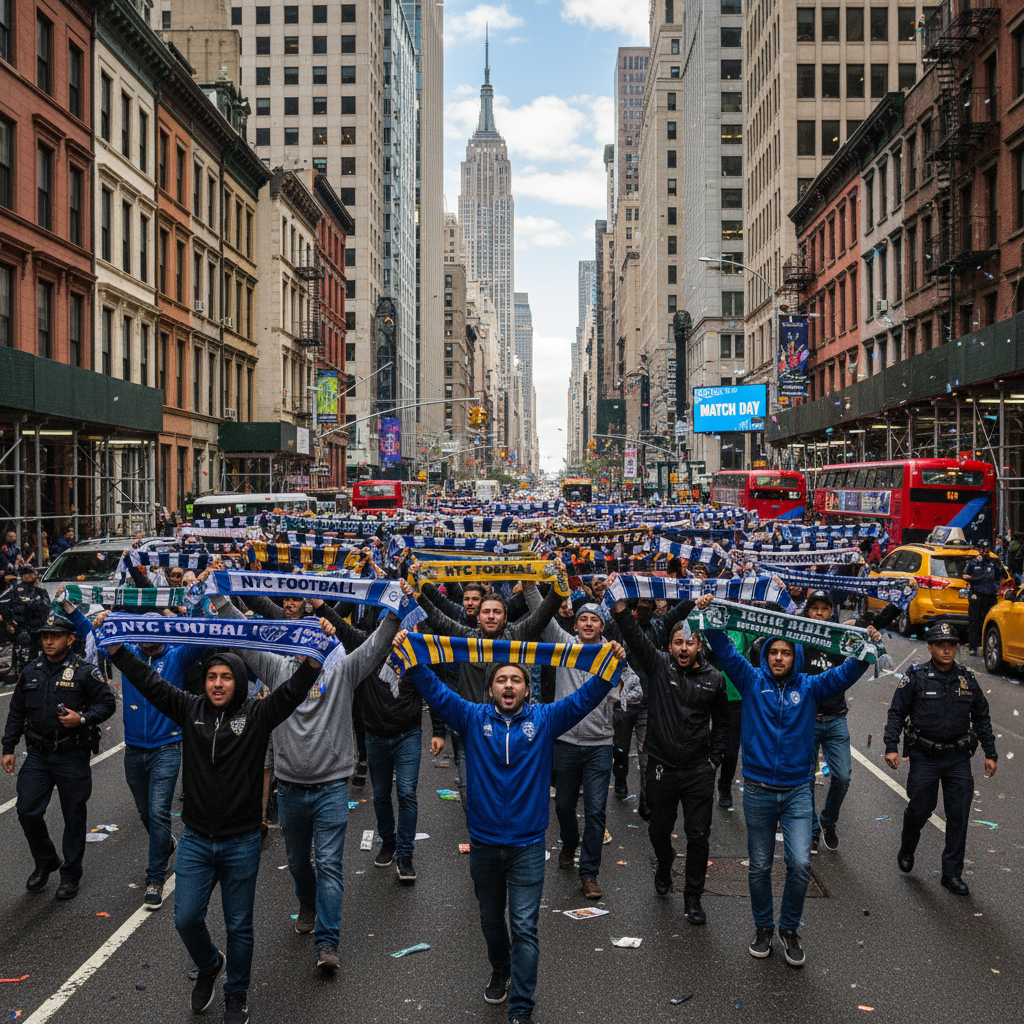
“What’s happening in New York isn’t just growth—it’s a cultural earthquake,” declares legendary coach Antonio Marquez, watching wide-eyed as 25,000 scarved supporters march through the concrete canyons of Manhattan toward a midweek match. “When New York truly embraces something, the world inevitably follows. We’re witnessing the birth of a global soccer capital.”
The numbers roar louder than the subway trains rumbling beneath the city’s surface. Youth participation in the five boroughs has surged an astonishing 62% since 2023, with pickup games transforming every available green space from Prospect Park to Van Cortlandt. The legendary concrete courts once reserved for basketball icons now witness impromptu soccer skills that blend South American flair with European precision and distinctly New York swagger.
New York’s professional teams have evolved from expansion experiments to soccer laboratories producing innovation that European giants now desperately study. NYCFC’s development academy—backed by City Football Group’s global network and fueled by New York’s unparalleled cultural diversity—has produced technical wizards that combine influences from every corner of the soccer world. When 18-year-old Bronx native Miguel Rodriguez completed his $17 million transfer to Manchester City in February—the highest fee ever for an MLS academy product—it wasn’t just a transaction. It was validation.
“New York kids bring something unique to world soccer,” explains Red Bulls sporting director Sarah Levin, gesturing toward the glistening Manhattan skyline visible from the team’s training facility. “They’re technically gifted but with a street-smart edge that can’t be taught. They’ve grown up competing for space and attention in the world’s most competitive city. That mentality translates perfectly to the ruthless nature of elite soccer.”
The city’s soccer influence extends far beyond professional academies. Neighborhood clubs like Brooklyn City FC and Queens United—once playing in obscurity on patchy fields—now serve as crucial developmental pipelines with international scouts regularly appearing on the sidelines. When Brooklyn’s Caribbean-influenced style meets Queens’ South American flair in local tournaments, the technical quality rivals anything seen in traditional soccer hotbeds.
Wall Street’s financial might has flowed into the beautiful game, with New York-based investors now controlling stakes in 27 professional clubs across six continents. The financial innovation that defines the city has reshaped soccer economics globally, with New York firms pioneering new models for player development, analytics, and global scouting networks.
The cultural earthquake resonates through every neighborhood. Times Square’s massive screens regularly broadcast matches to throngs of passionate fans. The city’s diverse population means every international match finds its audience—Colombian communities erupting in Jackson Heights, Mexican supporters packing bars in Sunset Park, Ghanaian fans transforming pockets of the Bronx into miniature versions of Accra’s most raucous viewing parties.
As the 2026 World Cup approaches—with New York hosting crucial matches including a semifinal—the city stands as the perfect embodiment of North American soccer’s dramatic rise. In the city where the world meets, the world’s game has found fertile ground, growing with the same relentless energy that defines New York itself.
The globe isn’t just acknowledging New York’s soccer awakening—it’s studying it, trying to understand how a city once indifferent to the beautiful game has transformed so completely. The answer lies in the city’s DNA: its global connections, its competitive spirit, its ability to absorb influences and transform them into something uniquely New York.
From the concrete pitches of the five boroughs to the gleaming professional stadiums, New York’s soccer revolution doesn’t whisper—it shouts with defiant pride, announcing to traditional soccer powers that the city that leads the world in so many ways will not be denied its place in the beautiful game. The world is watching, and New York—as always—is ready for its spotlight moment.