- calendar_today August 27, 2025
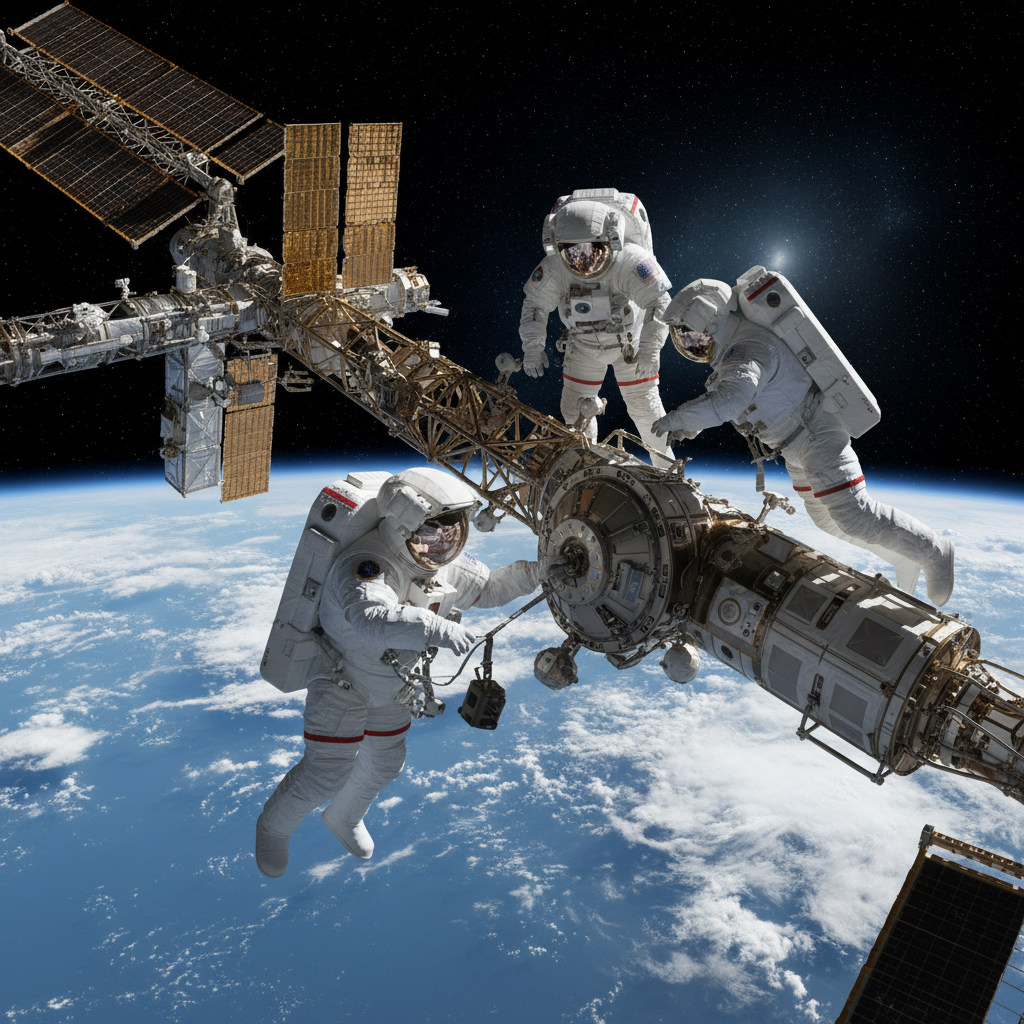
A leak on the International Space Station (ISS) has become serious enough for NASA to postpone an upcoming crew launch. NASA has not issued any official statements about the situation but internal sources reveal that officials are seriously worried.
And with good reason: The space station which has been orbiting Earth for more than twenty years has previously exhibited signs of strain. Time and pressure are finally manifesting their cumulative effects.
A Leak That Won’t Quit
Leaks on the ISS aren’t new. The space station has been dealing with a gradual yet constant air leak beginning in 2019 which mainly affects the Russian Zvezda service module. Launched in the early 2000s this module stands as one of the oldest parts of the complex and serves as an essential component of ISS infrastructure. The PrK transfer tunnel that connects Zvezda with Soyuz crew capsule and Progress resupply ship docking ports represents the main problematic area.
Russian cosmonauts have carried out multiple repair attempts on the station over the years. They have succeeded each time at reducing the air loss yet have yet to achieve complete containment. The station loses about two pounds of air daily because of the leak. The situation is manageable but still problematic for a station located 250 miles above the Earth.
The workaround? You should only open the hatch to the PrK when absolutely necessary.
So, What Changed?
Russia’s space agency Roscosmos announced this month that they had successfully sealed the PrK module completely. NASA supported this announcement by confirming that the latest repairs showed positive results. The leak rate inside the module ceased completely according to both agencies.
That should’ve been good news.
The station’s total air pressure continued its unexpected decline. The situation didn’t make sense because the PrK leak was supposedly fixed but the air inside the station continued to escape.
The Mystery Deepens
Two sources told Ars Technica that the likeliest explanation isn’t comforting: The hatch seals directing access to the PrK module may currently have developed leaks. Should these faulty seals be leaking into the PrK module, then the station may be compensating for lost air which would account for stable internal pressure despite overall air loss.
The situation remains unclear because nobody understands exactly what’s taking place. NASA remains vigilant while assessing the leak situation and planning for all potential outcomes.
According to a senior industry source speaking to Ars this situation presents a genuine concern. NASA space station program executives express their concern about the current issues.
A Launch Delay—and Growing Risk
NASA delayed the Axiom Mission 4 launch which planned to transport four astronauts to the station on Thursday. The organization required additional time to fully comprehend the leak problem.
NASA explained that the delay of Axiom Mission 4 will allow NASA and Roscosmos time to assess the situation and decide if further troubleshooting measures are required.
NASA has proposed a tentative launch date of June 18. The proposed launch date depends entirely on how events regarding the leak develop in the next few days.
Worst-Case Scenario? Let’s Talk Fatigue
The leak itself is worrying. But what really has experts on edge is what it might represent: a sign of high cycle fatigue. Metal structures experience this phenomenon quite frequently. Imagine bending a paperclip—once, it flexes. Repeated bending will eventually lead to its breakage. That’s fatigue.
Aluminum forms a large portion of the ISS structure which makes it susceptible to this specific type of fatigue stress. The station contains components which entered space back in 1998. The station has endured three decades of micro-vibrations together with docking stresses and thermal cycles.
Metal fatigue might lead to sudden catastrophic failure of parts within the space station if the worst case occurs. It’s not just a theory. Metal fatigue caused a catastrophic failure that ripped Aloha Airlines Flight 243 open during flight in 1988.
NASA knows the risks. Within its internal risk evaluations the space agency considers structural cracking on the ISS to be the top concern on their 5v5 risk matrix which evaluates both the probability and potential impact of hazards.
And Yet—Silence
NASA has provided only limited public commentary about the situation. Reporters and concerned observers asked many questions yet NASA has not scheduled any press conference in response. The only official word so far?
The International Space Station crew maintains standard operations while remaining secure.
And that’s reassuring—to a point. The aging space station shows increasing long-term damage and metal cracks may not be the sole visible issue.