- calendar_today August 28, 2025
From Seoul to the World: How KPop Demon Hunters Conquered Netflix
KPop Demon Hunters has shot to the top of Netflix rankings around the world since it was released in June. The fantasy adventure about three girls in a Korean pop band has racked up more than 33 million streams in two weeks, landed in the global top 10 in 93 countries, and is currently number two overall. Fans are making art inspired by the film, and calls for a sequel increase daily.
Success has followed the band into the real world, too. Since the film’s 20 June release, the two fictional bands at the film’s core – the good-girl, all-female Huntr/x and their bad-boy rivals Saja Boys – have stormed the charts, and in two weeks have surpassed fellow supergroups BTS and Blackpink. Seven songs from the movie appeared on Billboard’s Hot 100, and the two bands occupy first and second place on Spotify’s US chart – a first for fictional artists.
The film chronicles the adventures of Huntr/x – the trio Rumi, Mira, and Zoey, who must battle dark forces and demons as they try to live their lives as global K-pop superstars. The band’s conflict with the Saja Boys provides a backdrop of battles on stage, slick action sequences, and a narrative about friendship, trust, and self-identity. It’s an amalgamation of humour, heartfelt emotion, and fantasy that has charmed viewers worldwide.
The appeal is broad. Attracting viewers who have never listened to K-pop and those familiar with the genre, KPop Demon Hunters is as much about music as it is visual: the plot follows a classic narrative, and the characters’ journey of self-acceptance is similar to that in any coming-of-age story. But it is music that is bringing in fans: the unique sound and the film’s tie-in with the global K-pop trend have contributed to its breakout status. “The music was the first thing that caught my attention in the film, and this was key to making the film such a success,” says Amanda Golka, a Los Angeles-based content creator and journalist who is not a fan of K-pop.
Who are the Huntr/x?
The eponymous K-pop group at the centre of KPop Demon Hunters is three girls named Rumi, Mira, and Zoey. While they are at the peak of their global success as a band, their true mission is to fight supernatural forces and save the world. When the two bands meet, their fights on stage are spliced with slick action choreography, all under the high-octane lens of a K-pop music film. Lashai Ben Salmi, community leader for Korean and Japan-focused media organisation FranceTV Etudiez in Europe, says the result is unique. “The music, both the concept and the actual quality of it, is what I thought set this K-pop phenomenon apart,” Ben Salmi says. “It gives the film a surprising level of maturity.”
Music as inspiration and more
The film’s co-director, Maggie Kang, who is Korean-Canadian, drew inspiration for the songs from idols she knew growing up. For co-director Chris Appelhans and Kang, music in the film is both inspiration and plot device, and seamlessly fits into the narrative: it isn’t a distraction but an opportunity for the characters to push back against darkness and help others. “They both have magic powers that they use in the film, but their greatest weapon is the music that they make,” Ben Salmi explains.
Kang and Appelhans hired a Korean label to work on the music and enlisted the industry’s biggest names. Teddy Park, a Korean-American rapper and songwriter who has worked with Blackpink, and Grammy award-winning Lindgren, who has produced albums for BTS, BLACKPINK, and TWICE, created original songs for the film alongside studio musicians. Golka, the Los Angeles-based content creator and journalist, was impressed. “I have been blasting the soundtrack from Spotify every time I’m in the car,” she says. “It’s fascinating how music can be such a universal language.”
Hits are hits
Musically, songs from KPop Demon Hunters hold their own against real-world K-pop hits. Most are punchy and upbeat, like Saja Boys’ showcase “Lonely Heart” and Huntr/x’s “Only Human”. In both vocals and choreography, the sound and style of the bands have familiar, recognisable elements. “Only Human” has an electro-pop melody, complete with twinkling high notes, and a chorus that is as catchy as any BTS hit.
Fans already loved K-pop’s visual elements, even those who are not familiar with the genre. But in KPop Demon Hunters, even dialogue breaks are brief and tied into the music, which flows seamlessly throughout. Authentic Korean phrases and words can be heard in some songs, and Salsa, a member of Huntr/x, struggles to get her lyrics right at a songwriting meeting. Both bands’ members allude to struggles with mental health, another sign of the film’s and music’s relevance.
Mixing Korean and global
The music and traditional Korean elements also played a large role in the film’s success. K-pop, K-dramas, and Korean films and TV series have already become mainstream in the US and other Western markets in recent years, but KPop Demon Hunters goes a step further in its representation. In addition to traditional elements of Korean dining and a showcase of historical sites in Seoul, such as the ancient city walls, Hanuiwon clinics, public bathhouses, and Namsan Tower, the story moves away from cliché.
The production team made visits to South Korea to observe and gather references that could then be embedded in the film. Crew members visited folk villages, photographed the streets of the Myeongdong shopping district, and studied traditional clothing at a folk museum. Lip synch for the Korean pronunciation was filmed, despite the English-language dialogue in the final version, for authentic-looking animations, and body language in the film also seems authentically Korean to some fans. Some of the film’s Korean words, like gasa (passions) and eeumsae (command) in Saja Boys’ songs, can be difficult to understand even for Korean viewers, and it isn’t yet clear if these are correct, Golka adds.
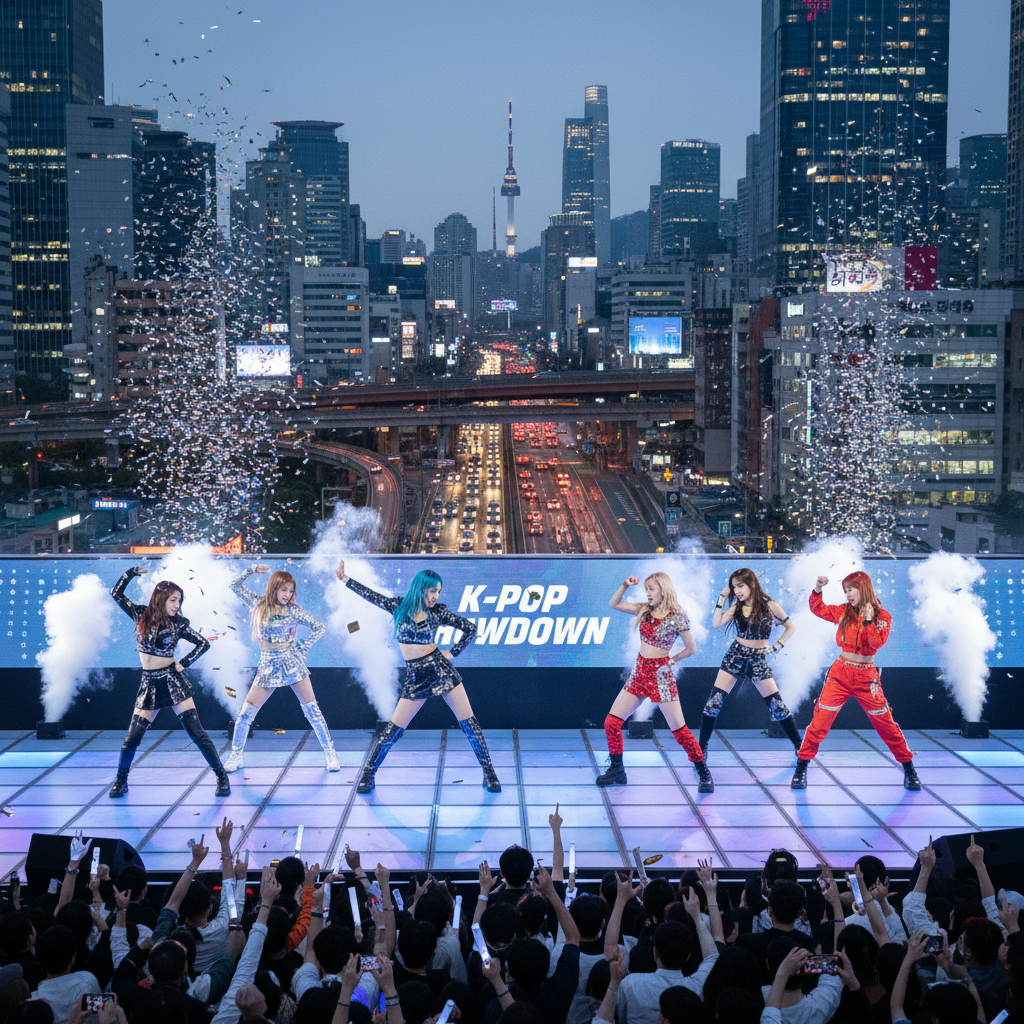
Fans also appreciate the attention to detail when it comes to K-pop fandom in the film, from fan signing events to the flickering lights of multi-coloured light sticks, Korean placards, or Kalgunmu (perfectly synchronised dance routines). KPop Demon Hunters features a wide array of scenes, with a range of idol references that encompass the full K-pop world rather than a single band or era. Accessibility has opened the door to casual viewers while making longtime K-pop fans feel included.