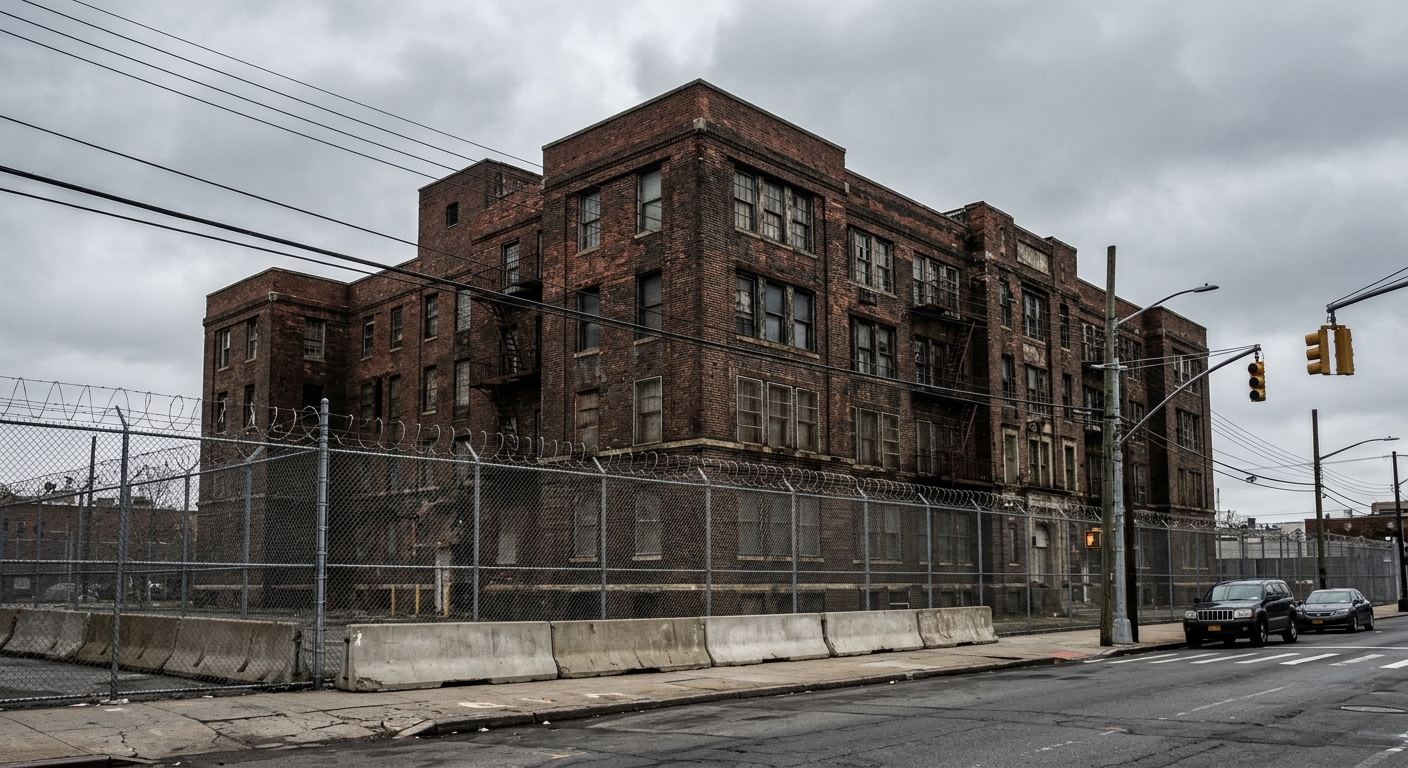
AI-generated illustration; not a photograph of the reported event.
- calendar_today November 20, 2026
Mayor Mamdani Releases Plan for Rikers Island Closure
Mayor Zohran Mamdani has released a comprehensive plan to close the correctional facilities on Rikers Island by the end of 2032. The initiative, which aims to transfer detainees to four newly constructed borough-based jails and three hospital units, will repurpose Rikers Island for climate and sustainability projects. The closure plan highlights a significant jail population reduction, seeking to lower the incarcerated count to about two-thirds of the current 6,600 by 2032—a benchmark that advocates note will be challenging to achieve and sustain.
Background: A Decade-Long Push for Closure
The effort to shut down Rikers Island has spanned nearly a decade, impeded by the COVID-19 pandemic, construction delays, and limited progress under previous administrations. The original legal deadline for closure was August 2027, a target that city leaders now acknowledge will not be met. The new plan offers the first detailed timeline for closure since that deadline was missed.
Calls for closure trace back to the late 1970s and intensified in the 2010s following high-profile incidents, including the case of Kalief Browder, whose time at Rikers drew national attention to the island’s longstanding issues. By 2017, a commission led by former Chief Judge Jonathan Lippman concluded, “Rikers must be closed.”
Core Elements of the Mamdani Plan
The proposal includes the gradual opening of borough-based jails and hospital units through 2032. The first hospital unit at Bellevue has already opened, with facilities in the Bronx and Brooklyn expected by 2028. The new Brooklyn jail is set to open in 2029, followed by additional facilities in 2031 and 2032. The new system is designed for increased safety and humanity, featuring smaller units, better sightlines, natural light, and temperature control. In total, the facilities will house 4,500 people upon completion.
Reducing the jail population is central: the plan targets no more than 5,500 detainees by 2029, and 4,100 by 2032. The city will invest $290 million in diversion programs, supervised release, re-entry support, and expedited case processing to help accomplish these targets.
Challenges and Critiques
Achieving these reductions will require substantial changes. The slow pace of New York City’s courts is identified as a major obstacle, with the median time from felony arrest to disposition now 431 days—four months longer than the statewide average. At least 1,400 current Rikers detainees have been waiting over a year for trial.
Advocates and leaders agree that without broad reform of the Department of Correction (DOC), the city risks transferring problems, including violence and dysfunction, to new facilities. Recent deaths in DOC custody, both on Rikers and in new hospital units, underscore the urgency of reform.
Correction Department Reform and Union Response
The plan emphasizes that infrastructure alone is not enough. Correction Commissioner Stanley Richards, the first formerly incarcerated person to lead the DOC, notes the importance of cultural changes and improved conditions. Measures include replacing thousands of broken cell doors, improving hygiene, enhancing training, and investing $50 million in programming for people in custody as recommended by remediation manager Nicholas Deml.
The Correction Officers' Benevolent Association (COBA) is named as a partner in the reform process. However, union president Benny Boscio has called the jail population wind-down unrealistic and advocated for maintaining facilities on Rikers Island despite its impending closure.
City Council, Oversight, and the Path Forward
The plan requires formal adoption by the City Council, which had previously indicated support for new benchmarks. Councilmember Sandy Nurse characterized the release as overdue and integral to hitting critical population goals. Oversight remains strong, with a federal consent decree and active court-appointed monitor, as the city navigates a complex transition to borough-based jails and climate redevelopment on Rikers Island.
Source: gothamist.com.